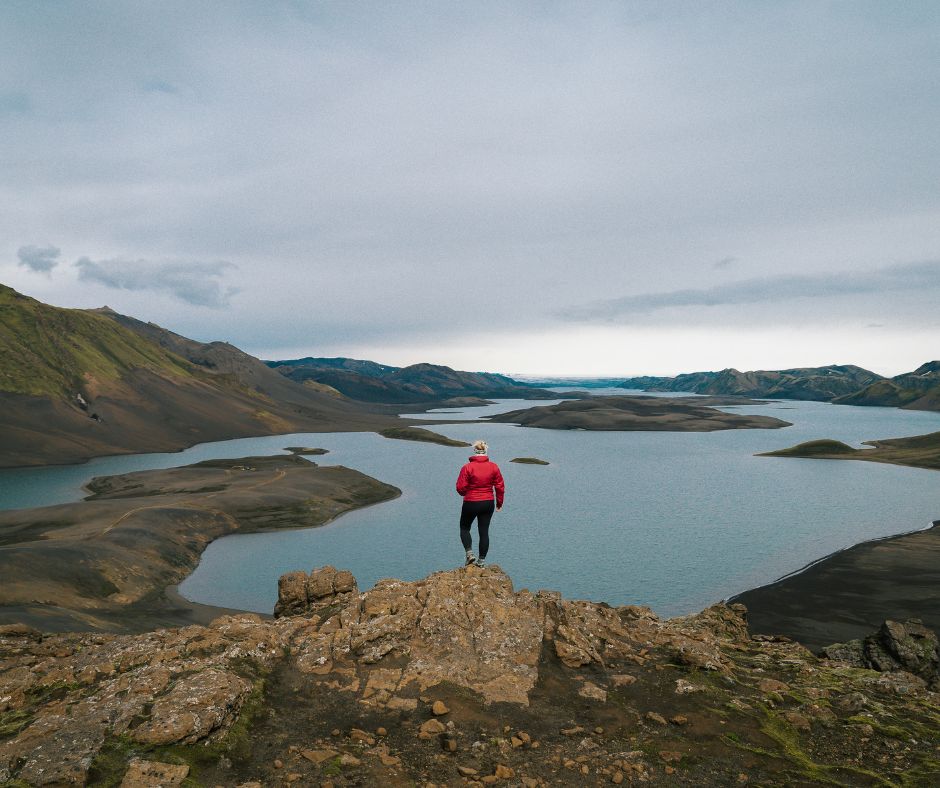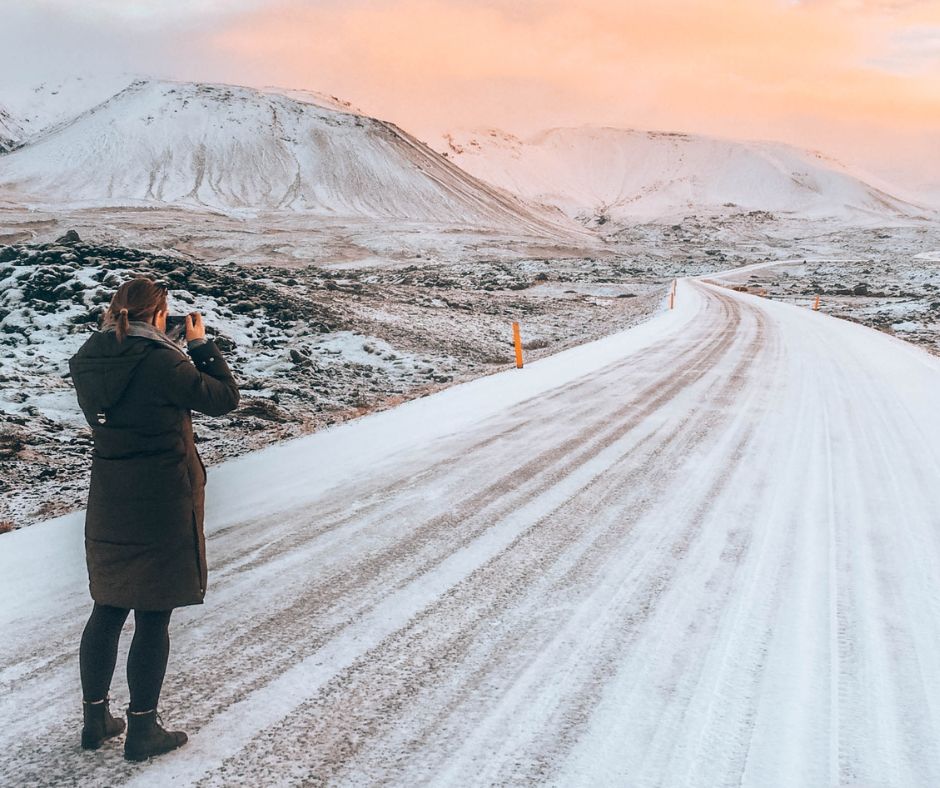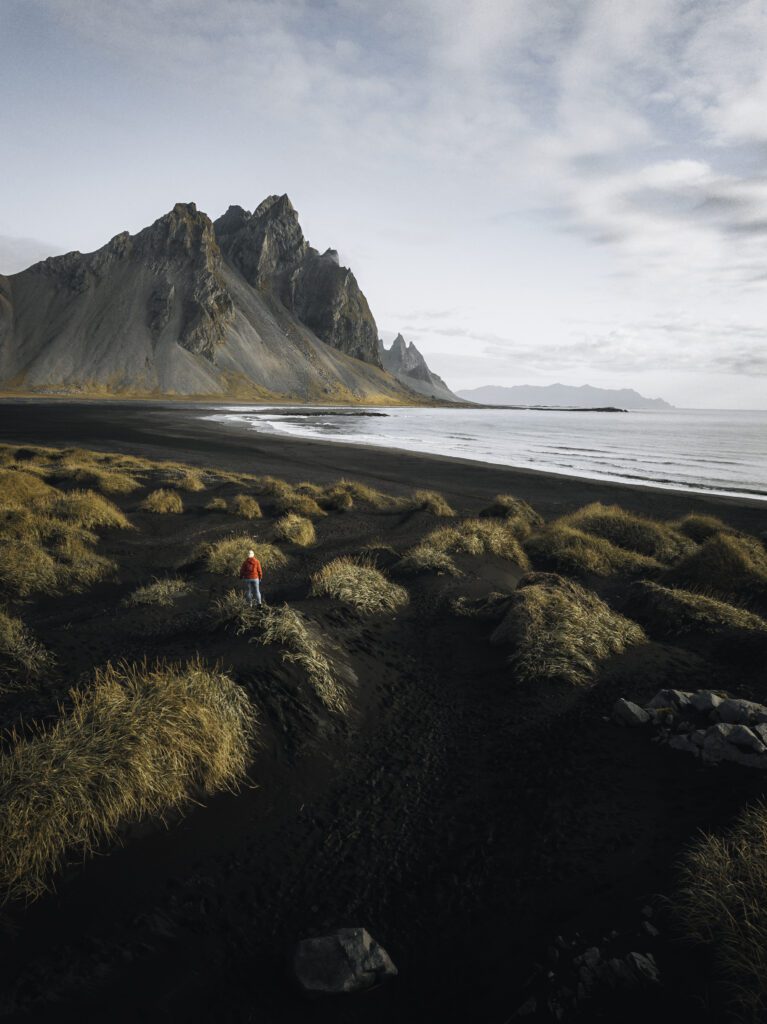
People are always asking me when the best time to visit Iceland is, but honestly, as someone who loves every single season here… that’s a tough one!
I could make a case for visiting any time of year.
Each season has its own magic, but I also know that every traveler is different.
So, to help you figure out your perfect time to go, I’ve put together a full breakdown of what to expect throughout the year.
Think of this post as the ultimate Icelandic sandwich: thick, hearty, and stuffed with all the good stuff!
We’re talking seasonal pros and cons, local know-how, plus festivals, activities, and answers to your most-asked questions.
From the best times for chasing the aurora to spotting Iceland’s puffins, you’ll know exactly when to plan your trip.
Let’s get into it!
Table of Contents:
- When Is The Best Time To Visit Iceland? A Seasonal + Monthly Breakdown
When Is The Best Time To Visit Iceland? A Seasonal + Monthly Breakdown

The first thing to know when deciding the best time to go to Iceland is that it really depends on what you want from your trip.
Do you want to see the midnight sun or the Northern Lights?
Are you looking for some winter activities, or would you enjoy your trip more if the winter were milder?
There’s a lot to think about when choosing the best season to visit Iceland, but don’t worry, I’ve got you.
Here’s what you can expect from each season (starting with the weather) to help you plan your epic Iceland trip.
Seasonal Weather in Iceland
I’ve often heard people refer to Iceland as having two seasons: winter and winter light! Ha!
Winters in Iceland are seriously not as cold as you would think. Because of the Gulf Stream effect, the coast stays relatively mild year-round.
Conversely, the summer never gets too warm either.
So while we have all four seasons in Iceland (and sometimes you get all four seasons in one day!), the temperatures are not very extreme.
Take a look.👇
| Temp. Highs | Temp. Lows | Daylight hours | Average Rainfall | |
| Spring | 45-50°F (7-10°C) | 32°F (0°C) | 15-18 hours | 2.3 – 2.9 inches |
| Summer | 60-65°F (15-18°C) | 45°F (7°C) | 16-22 hours | 2.1 – 3.5 inches |
| Autumn/Fall | 45-55°F (7-13°C) | 37°F (3°C) | 13-9 hours | 4.5 – 4.6 inches |
| Winter | 39-45°F (4-7°C) | Lows: 28-30°F (-2 and -1°C) | 12-6 hours | 4 – 4.3 inches |
Iceland In Spring
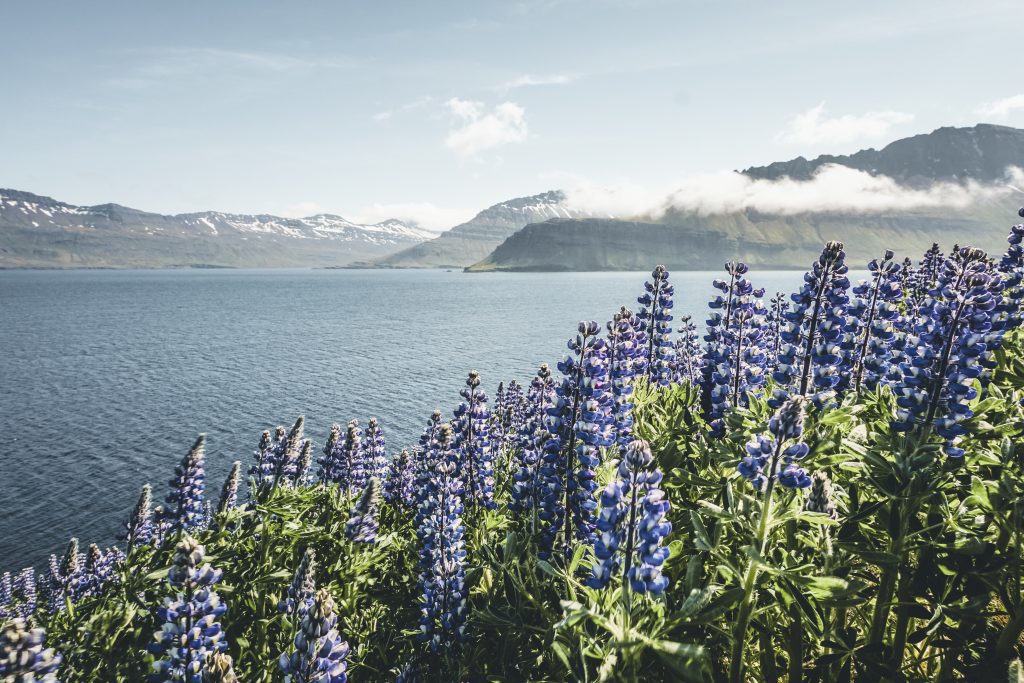
April and May are when Iceland’s shaking off its winter coat. Personally, I love that half-snow, half-mountain look!
Iceland in April

The snow’s melting (finally!) and maaaybe, just maybe, you’ll spot a few brave little flowers peeking through.
Daylight hours: 16 hours
Crowds: Shoulder season means fewer crowds.
Prices: Accommodation, flights, and rentals are cheaper.
Best Activities: Snowmobiling on a glacier and glacier hikes, geothermal pools, and hiking. If you go at the beginning of April, you could still catch the Northern Lights!
Festivals + Events: Aldrei Fór Ég Suður music festival, AK Extreme snowboarding event, and the Children’s Culture Festival.
Accessibility: Places like the beautiful Westfjörds generally become accessible in April, and unlike the Highlands, you can usually travel there year-round. However, certain roads may still close temporarily due to snow. Always check the weather and road conditions before heading out for the day.
Read the full breakdown about Iceland in April here.👇
➡️ READ: April in Iceland: Your Expert Guide to Weather, Daylight, Events + Natural Wonders
Iceland in May
The landscapes start to shift, some areas turn green, while in the north, patches of brown and lingering snow can still be seen. Spring is quietly arriving, and you’ll notice subtle hints of color beginning to emerge.
Daylight hours: 18 hours
Crowds: Fewer crowds
Prices: You might still be able to score deals on flights and accommodation during this time.
Best Activities: Fishing, snowmobiling, horseback riding, hiking.
Festivals + Events: International Day for the Icelandic horse and Ascension Day
Accessibility: Most of the areas in Iceland are accessible this month. However, the Highlands, Landmannalaugar, Thórsmörk (Þórsmörk), and other areas that experience a lot of snow will still be closed off.
Read the full guide to Iceland in May below.👇
➡️ READ: Iceland in May: What to Expect and How to Plan
Pros of Visiting Iceland In Spring
- You’ll get the best of both worlds: some of that glorious summer energy without the crowds or high-season prices.
- Puffins start showing up around mid-April (and stick around through August).
- There’s still a chance to catch the Northern Lights in early April.
- The days are getting longer, which means more time to explore, and the weather’s decent (by Iceland standards, anyway). 😉
If you’re starting to plan your spring adventures and want to make the most of your time in Iceland, having a detailed map and guidebook can be a total game-changer.
My 👉 Iceland Guidebooks + Maps include must-see sights, hidden gems, recommended restaurants, accommodations, and even practical pins like gas stations and rest stops, so you’ll never waste time guessing where to go next.
Cons of Visiting Iceland in Spring
- Spring in Iceland isn’t like “typical spring,” where you can break out shorts or a t-shirt. It can still freeze, and I often find myself wearing my warm winter coat in April!
Overall, if you’re looking for slightly warmer weather, fewer crowds, and more daylight hours…spring might be the best time to visit Iceland for you!
You’ll get to avoid high-season prices and might even catch the Northern Lights and a puffin or two.
Find out how you should pack for spring in Iceland here.👇
Iceland In Summer
Summer in Iceland is like turning the adventure dial all the way up!
With almost unlimited exploring hours and more adventures than you can count, this is the most popular season for visitors traveling to Iceland.
If you’re ready to see what June, July, and August have in store, keep reading.👇
Iceland in June
While you can expect a bit of everything weather-wise (it’s still Iceland after all 😉), June in Iceland brings long, bright days thanks to the midnight sun and mild temperatures.
Nearly 24 hours of daylight make it ideal for adventure and sightseeing.
It’s a great time to explore the country. The Highland roads start to open, most attractions and festivals are in full swing, and there are endless opportunities for hiking, horseback riding, and spotting wildlife like puffins.
Oh, and don’t forget to bring your sleep mask. You’ll thank me later!
Daylight hours: 21 hours (the sky doesn’t even get dark in mid-June!)
Crowds: Busy
Prices: This is peak season, so expect to pay more for flights and accommodation.
Best things to do in Iceland in June: Hiking in places like Kerlingarfjöll and the Fimmvörðuháls trail are now open for summer. It’s also a great time for birdwatching, puffins, and whale watching.
Festivals + Events: Reykjavík Arts Festival, Hvítasunnudagurinn, Iceland Independence Day, and the Secret Solstice Festival.
Accessibility: Around mid-June, previously inaccessible areas like Landmannalaugar and Þórsmörk are finally ready to be explored!
Dive into the full Iceland in June guide here. 👇
➡️ READ: Exploring Iceland In June? Here’s Everything You Need to Plan Your Adventure
Iceland in July
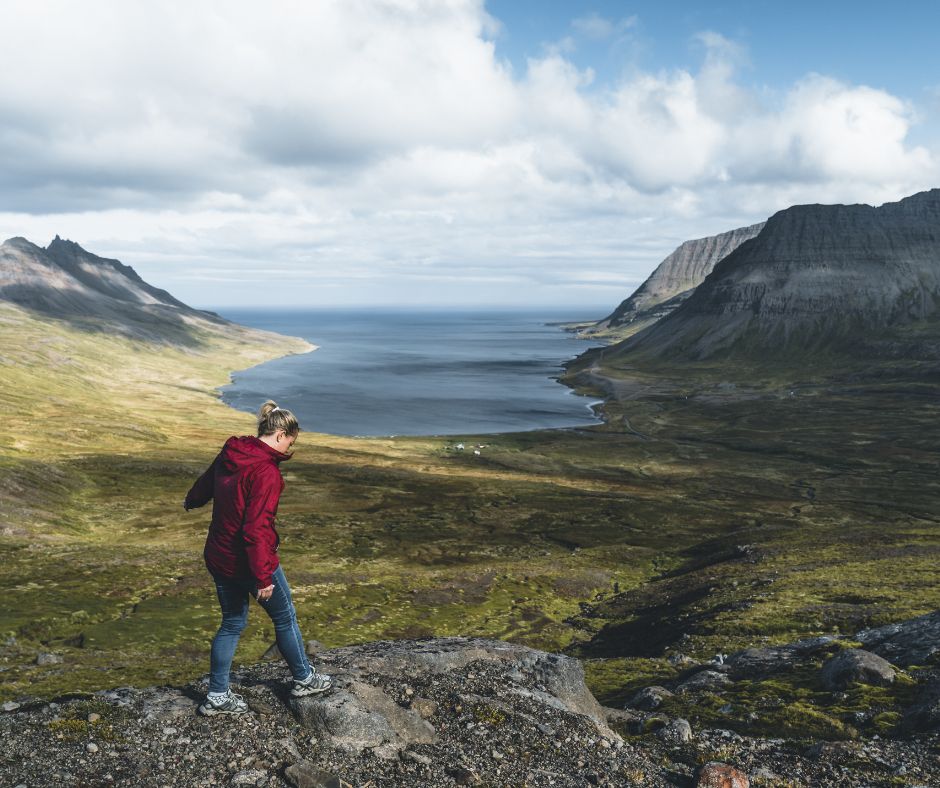
This is the month where Iceland’s lushness is on display and everything looks so inviting and beautiful!
While the Highland roads begin to open in June, by July most areas are fully accessible, allowing you to tackle some of the most incredible hikes in Iceland’s remote regions.
Daylight hours: 19 hours
Crowds: Expect crowds at attractions and roads to be busier.
Prices: Rentals and accommodations are expensive.
Best things to do in Iceland in July: Hiking, hiking, hiking! From epic hikes in the Highlands, Westfjords, and Þórsmörk to waterfall hikes like Glymur, it’s all accessible now. There’s also whale watching and horseback riding… the opportunities are endless!
Festivals + Events: Bræðslan festival featuring folk and indie rock music.
Accessibility: Roads are clear of snow, and you can go all over the country, including the Highlands and Westfjords. Just remember, you’ll need a 4WD for those F-Roads.
See the full post on visiting Iceland in July.👇
➡️ READ: Iceland in July: What to Expect, Where to Go, and How to Plan
Iceland in August
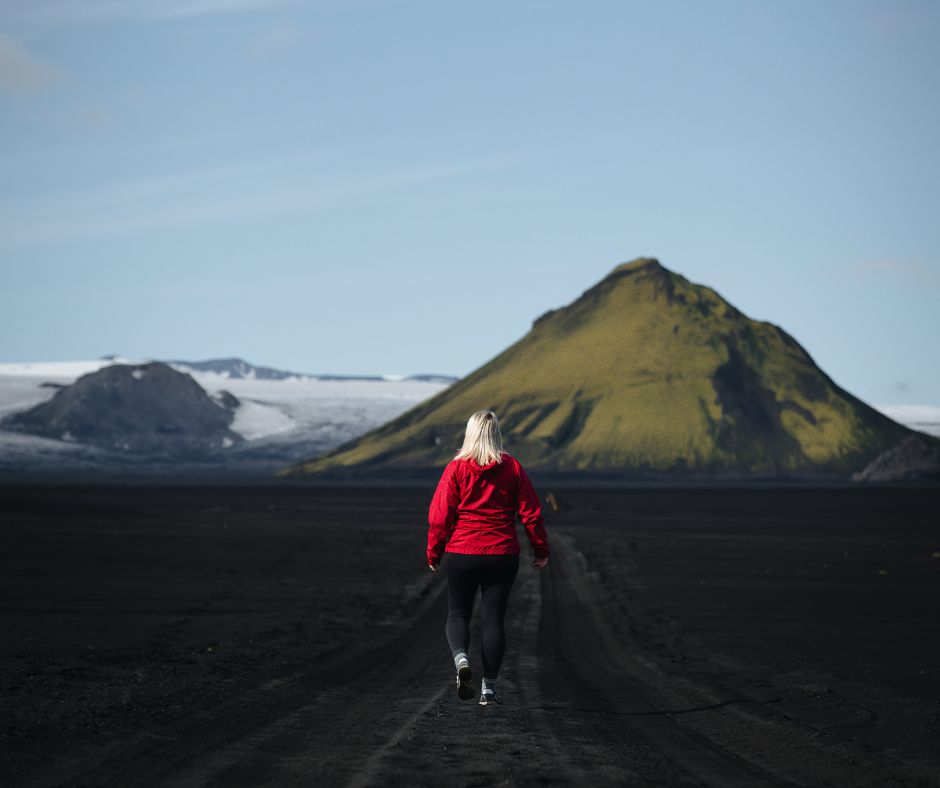
This month is usually sunnier with less rain than some other months of the year, and interior roads are still accessible.
Daylight hours: 16 hours
Crowds: They’re still here! But honestly, can you blame them?
Prices: It’s peak season, so prices on rentals and accommodation are still high.
Best Activities: Take a road trip to the Highlands, snorkel the Silfra fissure, or experience the great outdoors with a camping trip.
💥 If you haven’t tried camping with a camper van, you NEED to try it! My go-to company is Happy Campers. They have everything you need for an epic trip, including WiFi, a built-in kitchen and have thousands of rave reviews!
Get a special discount with Happy Campers when you book with my special code 👉 IWV10.
Festivals + Events: Þjóðhátíð, Pride Parade, Menningarnótt, Firework show at Jökulsárlón.
Accessibility: Road conditions are good, and the Highlands and Westfjords are still accessible.
Get the complete breakdown of what August in Iceland is really like.👇
➡️ READ: August in Iceland: Everything You Need To Know For An Unforgettable Adventure
Pros Of Visiting Iceland in Summer
- LONG summer days that seem to stretch on forever.
- The midnight sun (the longest day is June 20th) allows you to explore well into the night.
- Iceland’s summer weather is BEAUTIFUL and everything is so green!
- It’s wildlife prime time – puffins, whales, and sheep
- There’s lots to do – summer music festivals, outdoor events, and plenty of tours to choose from.
- The Highland roads open up, giving you access to epic spots like Landmannalaugar, Þórsmörk, and hiking trails such as Laugavegurinn and Fimmvörðuháls.
Cons Of Visiting Iceland in Summer
- It’s peak tourist season with more people at major attractions
- Higher prices, and you could find it difficult to book accommodation in Iceland.
- It’s light. All.👏 The.👏 Time.👏Great for exploring, not so great if you need darkness to sleep! I swear by this 👉 sleep mask – it completely blocks out the light.
- Don’t expect typical “summer” weather. No shorts and a tank top…I usually don’t even take off my long-sleeve shirt in the summer.
If you want to enjoy the gorgeous Icelandic summer weather and daylight hours, the months of June to August might be the best time to visit Iceland for you!
I’m not gonna lie, it’s the busiest (and priciest) time of year, but if crowds don’t bother you and you’ve got a little wiggle room in your budget, it’s 100% worth it.
(Psst… You can also use my 👉 Iceland Guidebooks + Maps to find all the best hidden gems, so you can escape the crowds, even if you’re traveling in summer.)
In summer, you’ll get to enjoy the beautiful green landscapes, the flowers blooming, and of course, the midnight sun.
The Highland roads (or F-roads) finally open up, so you can explore parts of the country that are off-limits the rest of the year.
And not to mention, there are a ton of festivals, activities, and concerts happening all around Reykjavík and throughout the country.
In short, visiting Iceland in the summer is an unforgettable experience.
Find out more about summer in Iceland here.👇
➡️ READ: Ready for Summer in Iceland? Unlimited Hours to Explore, Amazing Sites & More
Fall in Iceland

It’s a season that’s brief but oh-so worth it!
The spectacular fiery golden landscapes, cozy sweater weather, and the Northern Lights overhead. With fewer crowds and just the right mix of daylight and darkness, it’s one of the best times to visit Iceland.
Iceland in September
If you plan to visit Iceland in September, be prepared to be wowed by one of the most beautiful months.
Daylight hours: 13 hours
Crowds: Fewer crowds.
Prices: Cheaper prices on accommodation and flights.
Best Activities: Þórsmörk (this is one of the most beautiful areas of Iceland is only open from June-September, so take advantage while you still can). Visit the waterfalls in Iceland as well as the Westfjords. September is also one of the best months to see the Northern Lights!
Festivals+Events: Reykjavík International Film Festival, Réttir
Accessibility: The Highland roads start to close at some point during the month.
Check out my detailed breakdown of Iceland in September.👇
➡️ READ: Iceland In September: Everything You Need To Know For The Best Trip Ever
Psst… Packing for Iceland can be tricky because the seasons here aren’t typically what you’d expect in other places.
That’s why I created my FREE Ultimate Iceland Packing Guide that has everything you need from a layering cheat sheet, monthly weather averages, and packing checklists for every season.
I’ve also included my personal recommendations on items, from hiking shoes to what to bring for the kids.
Download your FREE Iceland Packing Guide here.👇
Iceland in October
The Northern Lights are out in all their glory, and the crowds die down. Everything is calmer, slower, and more peaceful but still beautiful. It’s the rainiest month, sure, but if you’re dressed right, there’s no reason to let that stop your adventures!
Daylight hours: 9 hours
Crowds: Fewer crowds
Prices: Budget-friendly
Best Activities: Chasing the Northern Lights, glacier hikes, the Golden Circle, and enjoying bars and cafes in Reykjavík.
Festivals + Events: Reykjavík International Film Festival runs from the end of September to the start of October, and the Imagine Peace Tower is on display.
Accessibility: The Golden Circle and Ring Road are accessible throughout the year and you might still be able to access the Westfjords at this time. However, the Highland roads could be closed, especially if there’s already snowfall.
Want all the details? Read the full Iceland in October breakdown.👇
➡️ READ: Iceland in October: Everything You Need For The Perfect Autumn Getaway
Pros Of Visiting Iceland in Fall
- Dreamy golden light and the changing color of the trees and landscapes.
- That cozy, snuggle-up-with-a-hot-drink feeling that comes with longer nights.
- “Normal” daylight hours (no more midnight sun, but plenty of time to explore).
- One of the best times to see the Northern Lights, and that, Team Iceland, should be reason enough! 😉
- You might experience the first snowfall!
- Prices are lower.
- Fewer crowds at major attractions and photo spots.
Cons Of Visiting Iceland in Fall.
- The weather is pretty unpredictable – windy, wet, and sometimes pretty cold.
- Autumn colors don’t always stick around because of the high winds and rain – some years, it skips straight to winter.
- The Highland roads close at this time.
Fall in Iceland is a season that’s hard to time, but if you can manage to visit from September through October, you’ll be amazed.
While the weather can be unpredictable, and you’re not guaranteed to see the sought-after fall foliage colors (rich yellows, oranges, and browns), when you do, it’s pure magic!
Autumn conjures up images of pouring a fresh cup of coffee on a cool morning or cozying up in one of the many coffee shops in Reykjavík, watching the world go by.
Or treating yourself to a piece of Icelandic lamb and some red wine at one of Reykjavík’s trendy restaurants.
Yum!
There is just so much to love about fall in Iceland.
From fewer tourists to lower prices to getting that first chance at seeing the Northern lights, there are a ton of pros for visiting Iceland in autumn.
Autumn was the season we fell in love with Iceland. Find out why, here.👇
➡️ READ: Fall in Iceland: Why This Underrated Season Might Be the Best Time to Visit
Winter in Iceland
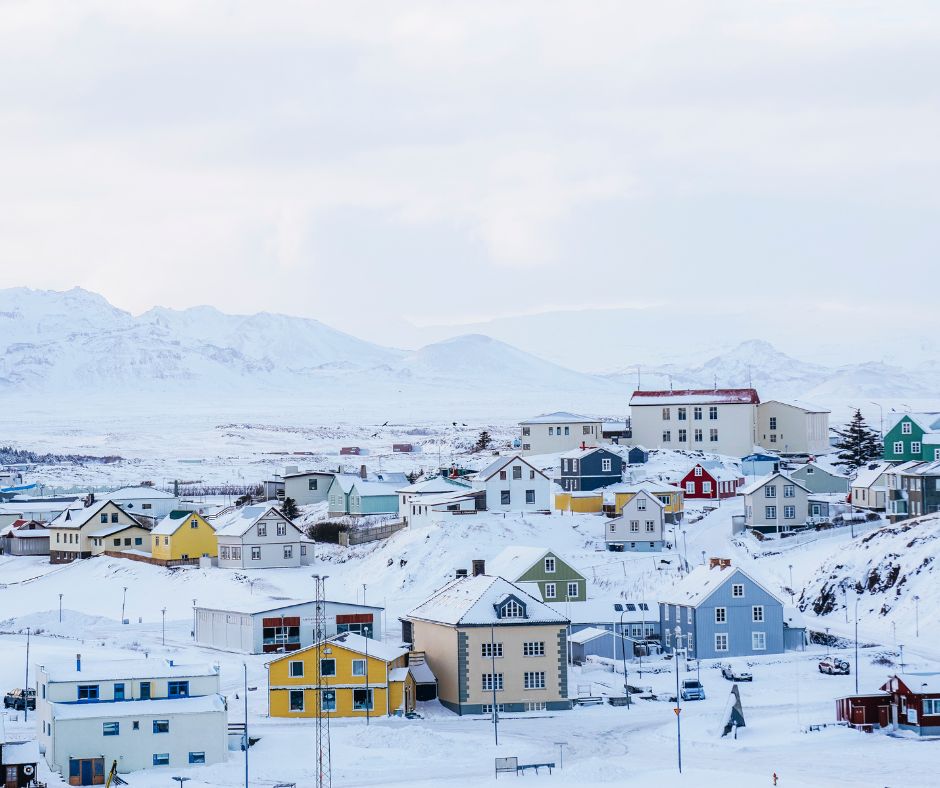
Winter is definitely the longest season, but don’t let that scare you. Many visitors are surprised by how much there is to do and how magical Iceland can feel in the colder months.
Iceland in November
Yes, November is considered winter in Iceland!
The browning landscapes and post-autumn bare trees, and dusting of snow on the mountains are so beautiful! You can expect rain, snow, and grey skies. What’s great now is that winter tours are in full swing.
Daylight hours: 6 hours
Crowds: Fewer crowds.
Prices: Cheaper accommodation, tours, and rentals.
Best Activities: Ice caves and glacier hikes, dog sledding, Golden Circle and Ring Road, Northern Lights, whale watching, and hot spring spas like the Sky Lagoon.
Festivals + Events: Iceland Airwaves, Imagine Peace Tower, and the festive kickoff to Christmas, including markets and Christmas buffets that often start in November.
Accessibility: Reykjavík, Golden Circle, and Ring Road are accessible, but the Highlands and Westfjords are not.
Click here for everything you need to know about Iceland in November.👇
➡️ READ: The Magic Of Iceland In November: Adventures, Festivals, and Tips & More
Iceland in December
Welcome, winter wonderland!
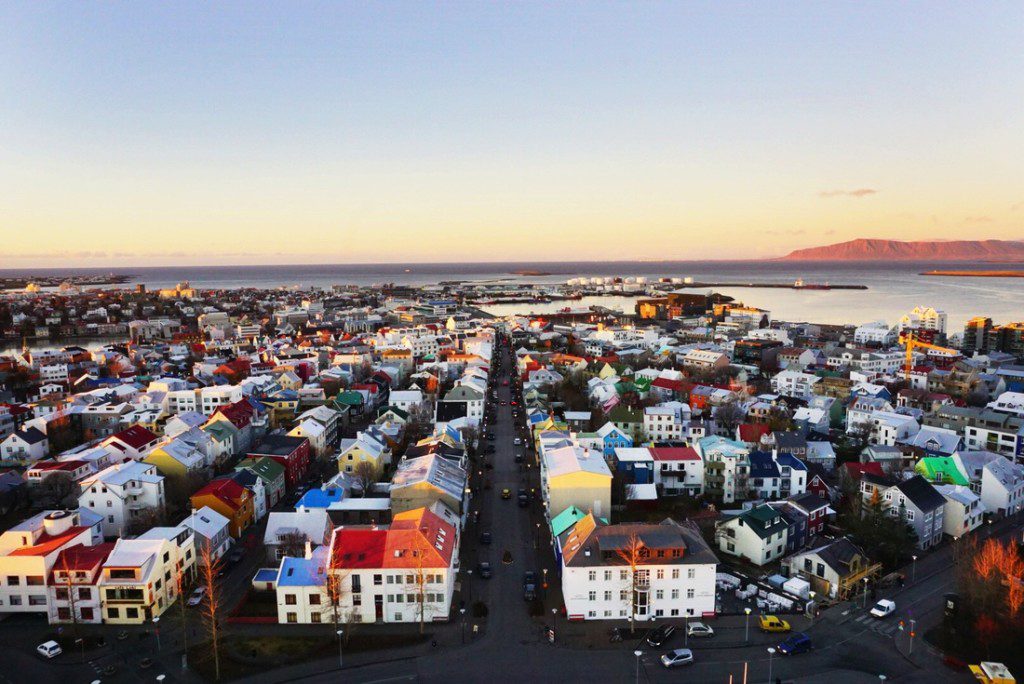
Iceland looks like a fairytale in December and even more so with all the Christmas decorations and festivities going on throughout the month.
The weather can be extreme so expect snowstorms and high winds, especially the further north you go.
Daylight hours: 4 hours
Crowds: Not as busy as summer, but towards Christmas, there are definitely more crowds.
Prices: Christmas and New Years in Iceland is an expensive time for travelers.
Best Activities: Hot spring spas, outdoor skating, visit the glacier lagoon and see Icebergs, Northern Lights (if the weather is good). Glacier hikes and ice caves.
Festivals + Events: Christmas markets, lighting of Advent candles, live concerts, Yule Lads (13 Santa-like Icelandic characters who visit children on the 13 nights before Christmas, leaving small gifts).
Accessibility: Reykjavík, the Golden Circle, and the Ring Road are accessible. Places like North and East Iceland can be harder to get to, and of course, the Highlands and Westfjords aren’t accessible.
Explore the full post about what to expect in Iceland in December.👇
➡️ READ: Traveling to Iceland in December? Discover a Winter Paradise
Iceland in January
Experience winter magic with snowy landscapes, frosty air, and long nights in January.
There’s something extra special about soaking in a natural hot spring while taking in the icy scenery! 😍
Daylight hours: 5 hours
Crowds: Not crowded
Prices: Save on accommodation and flights.
Best Activities: Ice caves + glacier hikes, whale watching, snorkelling the Silfra (yes in winter!). Waterfalls like Goðafoss, Hraunfossar and Barnafoss can be enjoyed in winter too.
If you’re spending time in the capital, I recommend doing the Reykjavík Food Walk Tour. It’s so fun sampling local dishes around the city and the tour guides are a lot of fun.
Use this SPECIAL CODE 👉: ICEVIEW for a 10% discount.
Take a peek at what you can expect.👇
Festivals + Events: New Year’s Eve and firework displays, Þrettándinn, the official end to Christmas, and Þorrablót (the rotten food festival!).
Accessibility: South Iceland, Ring Road, Golden Circle, and Reykjavík are accessible.
Read more about Iceland in January (weather, tips, and must-dos!).👇
➡️ READ: January in Iceland: Tips To Plan The Winter Vacation Of Your Dreams
Iceland in February
Get the benefits of the off-peak season and the beauty of winter in Iceland with longer daylight hours when you visit in February!
Daylight hours: 8 hours
Crowds: Not crowded.
Prices: Cheaper than peak season.
Best Activities: Explore lava caves and tunnels like Raufarhólshellir cave, chase waterfalls or go snowmobiling. Visit ice caves, take glacier hikes, and soak in a geothermal pool.
Festivals + Events: Winter Lights Festival, February 12th is Cream Puff day, February 13 (Sprengidagur), February 14th is the start of Lent and Ash Wednesday. These dates change every year depending on the Easter calendar, so always double-check them before you travel!
Accessibility: If you plan to explore the Snæfellsnes Peninsula, as well as North and East Iceland, be careful because driving conditions are challenging.
Learn more about February in Iceland here.👇
➡️ READ: A Guide to Iceland in February: Thrilling Adventures, Travel Tips, and Winter Magic
Iceland in March

There’s a promise of spring in the air as you find a nice balance between winter activities with longer daylight hours in March.
Daylight hours: 12 hours
Crowds: Less crowds.
Prices: Cheaper than peak season.
Best Activities: It’s still a great time for ice caves and glacier hikes, horse riding, snorkeling the Silfra fissure, visiting hot springs, and the Northern Lights can still be seen.
Festivals + Events: March 1st (Beer Day), Sónar Music Festival, DesignMarch, Food and Fun Festival. Easter usually falls between March and April.
Accessibility: Visit the Golden Circle, Ring Road, Snaefellsnes, and South Iceland in March. East and North Iceland are accessible, but take care when driving. The Highlands and Westfjords are still inaccessible.
Find out if March is the right time for your trip – read the full post here.👇
➡️ READ: Explore Iceland in March: Epic Adventures, Festivals, Planning Tips and More
Pros of Visiting Iceland in Winter
- Get ready to swoon at the golden hour sunsets and the amazing photographs you can take!
- You can take advantage of indoor activities like visiting the museums in Iceland or exploring the local cafes.
- Take snowy walks through beautiful landscapes!
- It feels divine soaking in a hot spring after a long, cold day.
- Explore ice caves and glaciers.
- Christmas lights, Christmas markets, Christmas decorations, Christmas spirit. Christmas EVERYTHING! 😍
- New Year’s Eve: Reykjavík is ranked in the top 5 places in the world to watch the fireworks show!
- Snow-covered mountains, frozen waterfalls, the Icelandic horse against the white landscape…it’s all stunning!
- There’s a chance to see the Northern Lights.
Cons of Visiting Iceland in Winter
- In mid-December, you’ll only get about 3-4 hours of light each day and it definitely limits how much time you have to explore.
- It’s cold (no surprise there!), so make sure your Iceland winter packing list is on point.
- Weather conditions change fast, and road closures (even on major routes) aren’t unusual.
- Zero access to the Highland roads without a tour.
There’s truly nothing like Iceland in winter.
From October to March, the landscape transforms into a snowy wonderland. If you can handle the darkness, you’re going to be pleasantly surprised.
Whether you want to soak in the cold springs after a chilly day, catch the Northern lights, or even experience the magic of Reykjavík at Christmastime, winter is definitely one of the best times to visit Iceland!
Curious about visiting Iceland in the winter? I’ve got all the details here.👇
➡️ READ: Iceland in Winter: Must-See Attractions, Driving, Weather, Packing And MORE
When to Visit Iceland: Best Months for Popular Activities
Choosing the best time to visit Iceland depends largely on what activities you want to do while you’re here.
Here are some of the best months for some of Iceland’s must-do experiences (plus a few handy guides to help you plan them well).
Best Time of Year to Visit Iceland for the Northern Lights
The best months to see the Northern Lights in Iceland are from late August until April. The most vibrant colors appear in October and April.
If you want to know when and where the best places are to see them, watch this.👇
When to See the Ice Caves in Iceland
To safely visit an ice cave, temperatures need to be cold enough for the ice to stay stable, so winter is the ideal time, typically from November to March.
I definitely wouldn’t recommend taking an ice cave tour in summer. One of the few exceptions is the Katla Ice Cave, which can be visited year-round.
Pro tip: You’ll need to join a guided tour to safely explore any ice cave.
➡️ READ: Ice Caves in Iceland: Tours, Best Time of Year, How to Visit + More
When to See Puffins in Iceland

Summer is the time when you’ll be able to see these adorable little birds.
The best months to visit Iceland for puffins are from the middle of April until the middle of August.
I’ve listed out the best places to spot them below.👇
➡️ READ: Puffins in Iceland: Top 6 Locations and Exciting Tours
Best Time to See Whales in Iceland
The best time to visit Iceland to see whales is in the summer between June and August.
It’s spectacular to see these huge creatures!
Want to know more about tours and the best places to spot them? Read this.👇
➡️ READ: Epic Whale Watching in Iceland: Your Top 10 Tips, Tours, and More!
Best Time to Hike in Iceland

Let me just say, if the need to hike pulses through your veins and you haven’t been to Iceland yet…
What are you waiting for?!
We have arguably some of the best hiking in the world.
Obviously, because of Iceland’s extreme weather, some hikes, like those in Landmannalaugar and the multi-day trails in the Highlands, are only possible in summer.
That’s definitely the best time to tackle them.
Skaftafell National Park, however, is accessible year-round and offers plenty of great hiking opportunities.
Not sure where to begin? Look, no further. These are some of the best hikes in Iceland.👇
➡️ READ: What Are the Best Hikes in Iceland? 13 Trails You Need to Explore!
FAQs
Got more questions to help you decide the best time to visit Iceland? This might help you figure it out.
What is the best month to visit Iceland?
The best time of year to go to Iceland really depends on what you’re hoping to get out of your trip.
Choosing when to visit will depend entirely on what you want to experience, which activities are on your must-do list, and of course, your budget.
The most popular months to visit Iceland are June, July, and August for warm weather and long daylight hours, or late August until April for Northern Lights viewing with fewer crowds.
I’m not gonna lie, personally, Northern Lights season is the best season for me!
When is peak season in Iceland?
Peak season in Iceland is summer (June, July, and August).
When is the cheapest time to go to Iceland?
The most budget-friendly time to visit Iceland is in the colder seasons, outside of June-August. However, you can expect higher prices over the Christmas and New Year period.
Is Iceland worth visiting in winter?
Yes! Winter in Iceland is pure magic, and there’s the benefit of fewer crowds, cheaper and experiencing tours that are only accessible in winter.
The Perfect Iceland Itinerary
No matter what time of year you choose to visit Iceland, it’ll be amazing!
After living in Iceland for over a decade and exploring the country from top to bottom, I can honestly say there are breathtaking landscapes to enjoy year-round – you really can’t go wrong.
That said, the time of year you visit does make a big difference.
It affects what’s open or closed, how much daylight you’ll have for exploring (which changes the pace of your trip), and which activities are possible, from summer hikes to winter ice caves.
That’s why I created my 👉 Iceland Itineraries – each one perfectly optimized for the season you’re traveling in. Whether you’re chasing the midnight sun or the northern lights, there’s an itinerary built just for that time of year.

Each itinerary includes a detailed, region-specific, day-by-day route with all the best stops, hidden gems, and drive times.
Plus, you’ll get a digital map packed with hundreds of pinned locations, including gas stations, restrooms, and great food along the way.
So instead of spending hours figuring out what’s possible in winter or how long you’ll have daylight in summer, you can just grab the itinerary that matches your trip dates and go.
Whenever you decide to visit, I know you’re going to fall in love with Iceland. 😍
Happy Planning!