So, you’re planning a trip to Iceland – land of waterfalls, volcanoes, and incredible adventures.
Well done on taking the plunge, BTW!
You’re ready to pack your bags and chase the Northern Lights, there are a few things to know before visiting Iceland that’ll make your trip a whole lot smoother.
After years of helping travelers plan unforgettable Iceland trips, I’ve collected the questions I hear most – and I’ve got honest, practical answers along with guides to help you learn even more.
If you’re visiting Iceland for the first time, and you’re wondering about money, safety, weather, itineraries, language, driving, and more…then stay right where you are!
Knowing these details before you travel will put your mind at ease and make travel less stressful. Hooray for that! 🙌
Let’s get into it!
Table of Contents:
- Picking Your Iceland Itinerary
- Things to Know Before Visiting Iceland: Weather + What to Pack
- Money in Iceland
- Traveling in Iceland on a Budget
- Language: Do They Speak English in Iceland?
- Safety in Iceland
- Driving in Iceland
- Tips on Booking Accommodation
- Staying Connected + WiFi in Iceland
- FAQs
- The Best Planning Tools: Iceland Maps + Guidebooks
Important Things to Know Before Visiting Iceland
For tips and insights that’ll make your trip smoother, safer, and way more fun, here are a few things to know before travelling to Iceland.
Picking Your Iceland Itinerary

Iceland is incredible, and there’s so much to see no matter when you go.
Once you’ve decided on the best time to visit, the next step is choosing the right itinerary.
And this is where a lot of travelers get stuck.
So, start by asking yourself two simple questions:
How much time do you have?
What kind of traveler are you? ie. Your planning travel style.
If you want to drive the iconic Ring Road, it’s doable in 7 days, but expect long driving days.
Prefer a slower pace? Focus on one region like South Iceland or Snæfellsnes Peninsula, and do it well.
Iceland looks small on a map, but driving times are deceiving, and there’s always another stop on your route that’ll tempt you to veer off-course!
(This blog post 👉 how long does it take to drive around Iceland, breaks it all down for you).
If you’re visiting in winter, it might mean just 4-5 hours of daylight for sightseeing. Knowing how much you can fit into a day will help you plan realistic routes.
To make planning easier, I’ve put together a list of key questions to ask yourself when you plan your itinerary.
💥But if you’d rather skip planning the logistics and want a plug-and-play itinerary, I’ve got you covered!
My Iceland itineraries make trip planning easy because everything’s already mapped out for you. 🙌
You’ll get daily schedules with suggested stops and how long to stay at each one, driving times, restaurant recommendations and handpicked places to stay.
Each itinerary also comes with an interactive digital map, so you’ll know exactly where to go (even where to find the next gas station).
Want to tweak it? Go for it!
Adjust it or use it as is, it’s totally up to you!
Things to Know Before Visiting Iceland: Weather + What to Pack
Iceland’s weather doesn’t follow the usual vacation rules, so packing takes a little strategy.
Expect plenty of wind and rain, and yes, sometimes even snow in the fall.
Here’s what each season in Iceland is really like (and what to pack for it).
Summer (June – August): You’ll have endless daylight and long adventures, but don’t expect your typical summer weather. Summer in Iceland might be cooler than you’re used to. Be sure to add layers and even a light jacket to your summer packing list!
Fall (September + October): When you’re packing for Iceland in the fall, know that you can expect all four seasons in a day! This fall window is short and unpredictable, but you can expect rain and maybe even snow by October. You’ll definitely want to pack rain gear!
Winter (November – March): Think long, dark nights, snow, wind, and ice – the full winter shebang! You’ll want warm layers, sturdy boots, and something waterproof to tackle those elements when packing for your Iceland winter trip.
Spring (April + May): When spring rolls around, days get longer, the air warms up, and you’ll finally see a bit of green again. It’s still chilly, though, so keep those layers handy when packing for spring. Shorts and tank tops can stay home for now!
As you can see, there’s a bit more to packing for Iceland than just tossing a few sweaters in your suitcase.
If you’re feeling overwhelmed, I’ve got you covered with my 👉Ultimate Iceland Packing Guide.
Iceland’s weather can really impact your trip if you’re not prepared.
Inside the guide, you’ll find smart packing tips, a breakdown of what to wear, monthly packing lists (from accessories to photography gear), suggested shopping lists, and much more!
Get the FREE guide here.👇
Money in Iceland
One of the most practical things to know before traveling to Iceland is how to pay for things — and luckily, it couldn’t be easier.
Currency: The currency in Iceland is the Icelandic króna (ISK). Many places (restaurants, bars, tourist attractions) will take U.S. dollars, Canadian dollars, Euros, Norwegian, Swedish and Danish currencies.
Payment: Do you need cash in Iceland? Well, Icelanders usually pay for everything by credit or debit card. Payments can be made by tapping your card or through Apple Pay. If you don’t have a chip on your card you can sign for the purchase. Most people don’t even carry cash because paying by card is so common. I’ve seriously never even held cash here to this day!
Exchange: If you prefer to carry cash, there’s a bank and an ATM at the Keflavík Airport where you can exchange currency. Just know that you might be charged an international fee for ATM withdrawal – check beforehand with your bank.
Tipping: You don’t have to worry about tipping in Iceland – this goes for restaurants, bars, and even taxis! Gratuity is already built into the cost of the meal. Of course, Icelanders know that tipping is a big part of American culture so they would never turn down some extra added to the bill!
Bottom line: Iceland makes paying for things super easy!
Traveling Iceland on a Budget
I’m not gonna lie to you… Iceland is expensive!
Like…really expensive.
Just keep in mind that nearly everything is imported into Iceland, so things like food, alcohol, and souvenirs can add up quickly.
Here are some places and ways to save money on your trip.
Food + Drink

As one of your biggest expenses here, you’ll be happy to know that there are lots of ways to save on food and drink in Iceland.
From buying food at the grocery store and prepping it yourself, to booking accommodation with breakfast included or visiting delicious yet budget-friendly restaurants in Reykjavík, you have options my friend!
Another option is to rent a campervan so you can have meals on the go, and save on restaurants & hotels altogether!
Psst. If you go that route, check out my go-to campervan rental company 👉 Happy Campers.
Be sure to use my code: IWV10 for a 10% discount off the total rental price!
Tax Free Shopping, Iceland
Here’s some good news for shoppers: you can actually get money back on certain purchases made in Iceland!
What is VAT (Value Added Tax)?
This is a tax that can be refunded on items purchased in Iceland and intended for use outside the country.
What qualifies for a VAT refund?
Purchases of clothes, souvenirs, and other gifts with the minimum amount on one single purchase receipt must be ISK 12,000.
How to claim your VAT refund in Iceland?
Ask the cashier for your tax-free receipt at the time of purchase. Submit receipts to the customs office at Keflavík International Airport. The refund is usually given in ISK cash, which can then be converted to your own currency.
*VAT in Iceland is currently 24%, or 11% on special goods.
If you’re looking for more ways to budget on your trip, these tips are gold!👇
➡️ READ: How to Travel Iceland on a Budget: 25 Tips to Save Money on Your Trip
Duty Free, Iceland
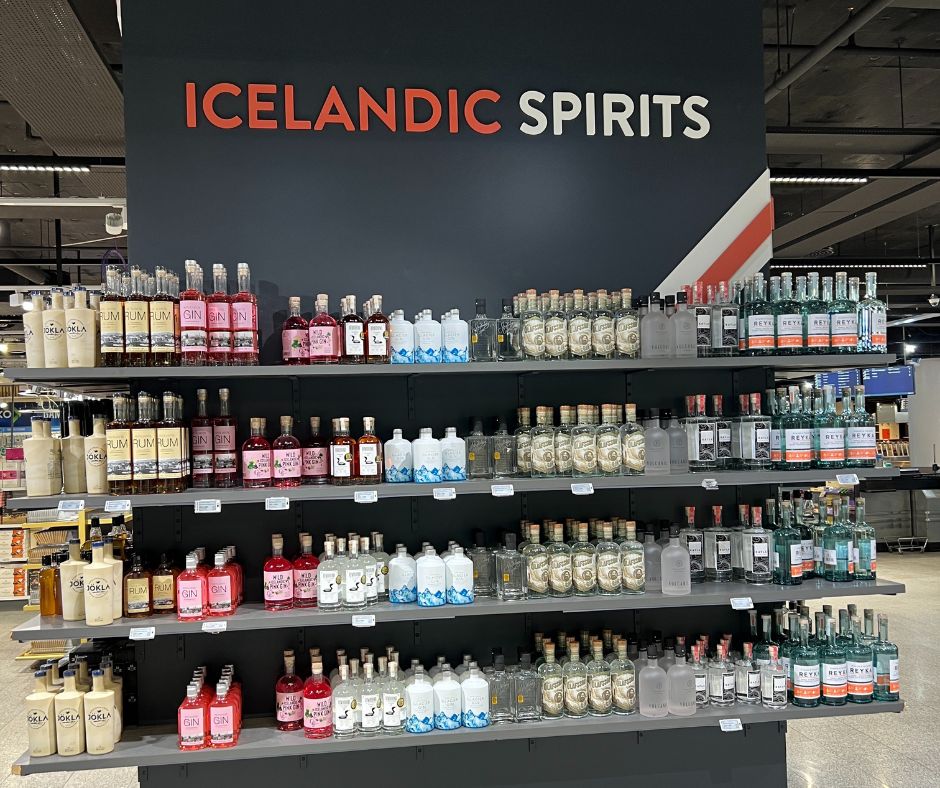
Did you know that Iceland is one of the few countries in the world to have duty-free in both the arrivals AND departures at Keflavík International Airport?
Alcohol in Iceland is expensive so I highly recommend buying it at duty-free before you leave the airport. This will be a huge money saver.
Even the locals stock up on alcohol at duty-free!
Pro tip: You have to be 20 or older to purchase alcohol and 18 for cigarettes and tobacco. If you choose not to shop at a duty- free or run out during your trip, the only place to buy stronger alcohol than the beer at grocery stores is at a store called Vínbúðin.
First time in Iceland?
Download my FREE Iceland Arrival Guide to easily get through KEF Airport.
Know exactly what to expect at passport control and baggage claim. I’ve even included tips for your first day in Iceland, plus discounts to help you save even more on your trip!👏👏
Language: Do They Speak English in Iceland?
One of the most important things to know about Iceland is that it’s SUPER easy to get around speaking English!
The local language is Icelandic, but Icelanders learn English at school…and they’re very proficient in it.
Especially if you’re sticking to the main tourist route, you’ll have no problem speaking English in Iceland.
In fact, English is so commonly spoken that Iceland’s English-speaking percentage is 98%.
Yes, really – 98%!
Pro Tip: I usually start off with “is English ok?” just to give them a heads up, rather than giving a dumbfounded look when they start speaking in Icelandic.
That being said, I do suggest learning a few Icelandic phrases, you know, as a friendly gesture.
Check this out for a few handy phrases.👇
➡️ READ: Icelandic Language: Fun Facts, Quick Phrases, and Tips for Travelers
Safety in Iceland

If you’ve been wondering, “Is Iceland safe to visit?” The short answer is yes!
In fact, Iceland consistently ranks among the top three safest countries in the world and is perfect for solo travel.
There’s almost no crime, police don’t even carry guns, and it’s totally normal for babies to nap outside while their moms sit having coffee.
For real!
But while the country itself is incredibly peaceful, its nature can be unpredictable.
Think wild weather, shifting glaciers, volcanic activity, and powerful ocean waves, especially at places like Reynisfjara Beach, where “sneaker waves” have sadly caught many people off guard.
Not to mention driving in Iceland (but more on that in a moment…).
So, the real key to staying safe in Iceland is just being aware.
Always respect warning signs and roped-off areas, download the SafeTravel app for live alerts about storms or road closures, and remember that the emergency number is 112.
Do that, and you’ll be free to relax, explore, and enjoy one of the most magical and safest places on Earth.
Driving in Iceland
Taking a road trip is the best way to see the country.
That said, the weather and terrain will affect your itinerary as well as the car you drive.
Here are a few things to know before driving in Iceland:
What to expect at gas stations
It’s common to find everything from standalone pumps to full-on grocery stores at Iceland gas stations. Take note, if you’re traveling to more remote areas, there aren’t many gas stations, so be sure to fill up when you do see one!
The F-Roads
If you plan on reaching the interior of the country, the highland roads (called F-Roads in Iceland) are extreme and unmaintained, so expect a rocky ride full of potholes and steep sections.
Do you need a 2WD or 4WD?
For the most part, if you’re traveling in summer and sticking to the main routes like the Golden Circle and South Iceland, Ring Road, Snæfellsnes Peninsula, and the capital, you’ll do just fine with a 2WD. However, I always suggest a 4WD in the winter, and it’s non-negotiable for the F-Roads.
Pro tip: The road signs in Iceland can be tricky too so make sure you familiarize yourself with them before your road trip.
Regardless of when you’re visiting Iceland, you’re going to need a reliable car.
I always recommend going with a local company that understands Iceland’s unique weather and road conditions.
From easy online check-in to key box pickup, insurance coverage, and 24/7 roadside help, Blue Car Rental makes your trip stress-free.
And the best part?
Use my 👉 VIP link and automatically get 5% off your rental, NO CODE NEEDED!

Tips on Booking Accommodation in Iceland
One of the first things I suggest once you’ve got your itinerary sorted is to book accommodation in Iceland right away.
With tourism on the rise, Iceland’s accommodation options haven’t quite caught up with the demand.
When you’re booking hotels and guesthouses, try to secure places that have breakfast included.
An early breakfast in Iceland can be difficult to find.
Here are a few of my suggestions for accommodation when you’re traveling the Ring Road. 👇
➡️ READ: Ring Road hotels and accommodation.
Staying Connected + WiFi in Iceland
WiFi is strong in most places, and I’ve honestly never had a problem staying connected.
My favorite way to stay online in Iceland is with an Airalo eSIM.
You don’t even need a physical SIM card.
Just download the app, select your destination, make the purchase, and install your eSIM.
Once you land in Iceland, all you need to do is activate it, and you’re all set! 💃
Click here to stay connected in Iceland 👉 Download Airalo.
FAQs
Here are a few more questions you might have about your Iceland trip:
How Far in Advance Should I Plan a Trip to Iceland?
Planning a trip to Iceland takes TIME! So the more you can plan ahead, the better.
And trust me, I’m not just saying this because I’m a travel planner.
Iceland can be unpredictable, especially when it comes to weather and road conditions.
I know that you might be an adventurous traveler, but trust me when I say – don’t leave things up to chance when it comes to planning your Iceland trip!
Start planning your route, your accommodation, your transportation, and whatever else you need well in advance – I’d say at the very minimum at least 4-6 months.
You’ll want to plan even farther out if you plan to travel in the busier summer months (June – August) to secure accommodation.
Iceland is a country that really requires a LOT of planning!
Can You Drink Tap Water in Iceland?

Not only is it safe, but Icelandic water is the best water in the world.
So absolutely, drink it out of the tap at your hotel, or even fill up at a stream when you’re hiking a glacier. It’s clean, clear, and refreshing!
Oh, and remember to bring a reusable water bottle.
What Is The Best Time to See the Northern Lights in Iceland?
Traveling to Iceland in summer is definitely the most popular season; the Highland roads are open, and you have so many daylight hours to work with.
The major downside is that you don’t get to see the Northern Lights.
The best time of year to view them is from the end of August until April.
Learn more about it here.👇
➡️ READ: How To See The Northern Lights In Iceland: Best Viewing Spots, When To Go And MORE
Is Iceland Safe for Solo Female Travelers?
The low crime rate makes Iceland the ideal place for solo female travelers to visit safely.
Learn more about what makes Iceland the perfect place for solo travelers in the video below.
The Best Planning Tools: Iceland Maps + Guidebooks
Knowledge is power, my friend, and the more things to know before visiting Iceland, the more confident and prepared you’ll feel on your trip.
One of the best ways to feel truly ready?
Having a local by your side who knows all the ins and outs – from hidden gems to practical tips on roads, weather, and sightseeing.
Buuuut…..
Since hiring a local guide for every step of your trip isn’t exactly realistic (and pretty expensive 😉), I’ve created the next best thing.
My 👉 Iceland Maps + Guidebooks give you all the inside secrets only a local would know and more.

I’ve got must-see stops, hidden gems, driving info, and even seasonal advice, all in one easy-to-use digital package.
My digital map has hundreds of pinned locations, so you won’t be scrambling to find a restroom, grocery store or any of Jeannie’s gems. They’re all there for you!
Whether you’re driving the Ring Road, exploring the Highlands, or uncovering Reykjavík’s secrets, these guides have you covered.
💚 This is what one customer, Jenm had to say: 💚
There’s a reason why Jeannie’s guides all have 5 stars. We give this guide a 10/5 rating. It’s truly a lifesaver.
Okay, I’m blushing.
But seriously, they’re amazing, even if I do say so myself.
Can’t wait to see you here. 😊
Happy Planning!

Pin it for later!