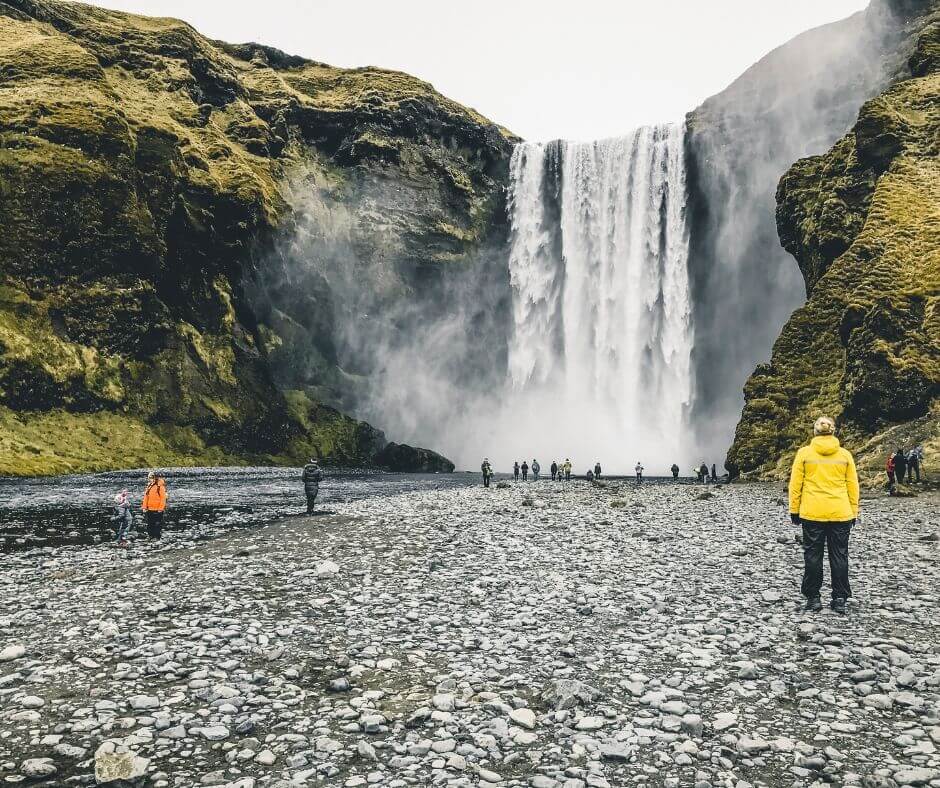
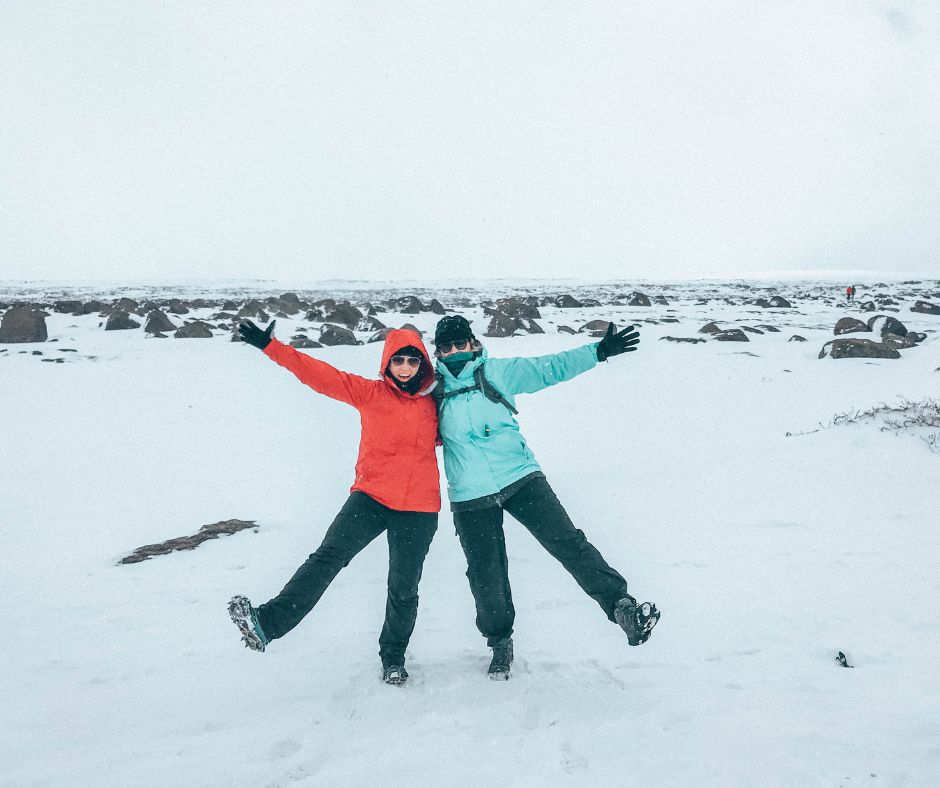
Okay, let’s settle this once and for all: how cold is Iceland really?
If you’ve been researching a trip here, you’ve probably seen two completely different answers.
Some people say Iceland isn’t that cold at all. Others say it’s freezing.
It’s confusing, right?! Understanding how cold it is will affect everything – how you pack, what you wear, even what you plan to do.
After living in Iceland since 2015, I can tell you that the thermometer doesn’t tell the full story.
In winter especially, this can look like a full-on winter wonderland one day, followed by slushy, half-melted snow the next… and then freezing temperatures that turn everything into ice right after that.
If you want to know how cold it actually feels, what to expect in different seasons, and how to prepare for it, you’re in the right place.
Let’s get into it!
The Climate in Iceland
Iceland has a cool maritime climate, which basically means cool summers and cold winters.
But the biggest thing to know is that the weather here can be incredibly unpredictable.
It’s not unusual for weather conditions to change quickly… and in a single day!
Is Iceland Cold? The Truth About Iceland’s Weather
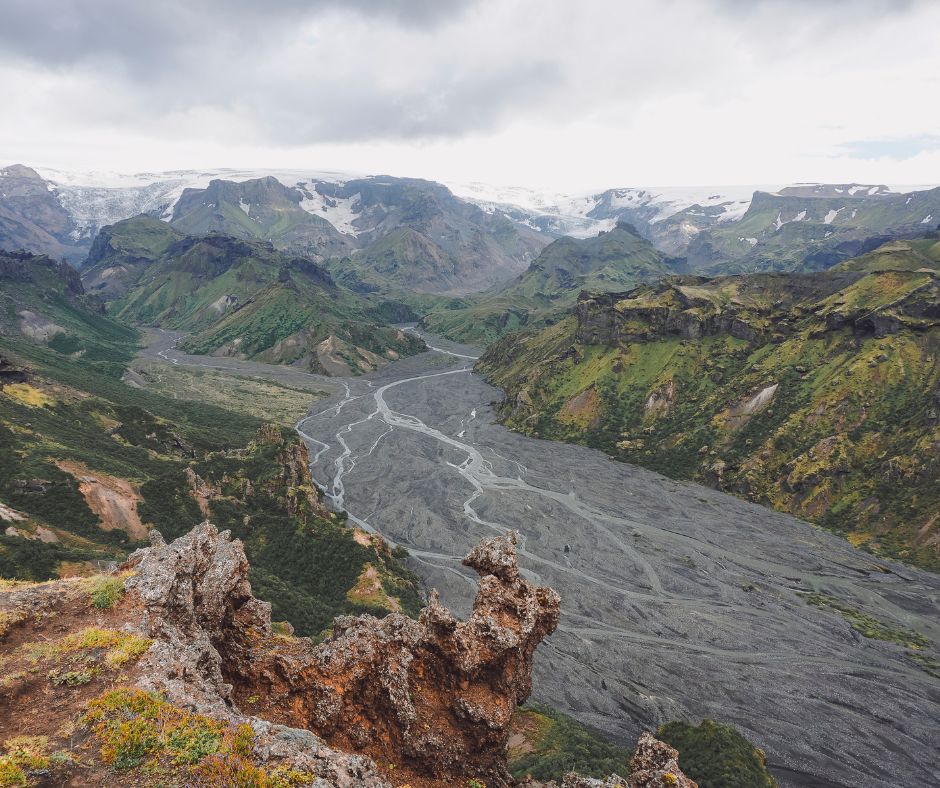
On paper, Iceland isn’t as cold as its name suggests.
Thanks to the Gulf Stream, temperatures here are actually milder than expected for a country this far north.
For example, winter temperatures in Reykjavík are usually around 30 – 40°F (1 to 2°C).
If you’re coming from places with extreme winters (like parts of the U.S., such as the Midwest), Iceland might actually feel less brutally cold at first glance.
That being said, the real feel of how cold it is can be a bit different from the numbers.
And while temperatures aren’t usually extreme, the combination of wind and damp air makes it feel colder than you’d expect.
How Cold is Iceland in the Winter
One of the biggest misconceptions is that Iceland is covered in snow all winter long.
The reality is that winter is cold, but it’s not always snowy.
Winter in Iceland typically runs from November through April and temperatures hover around 28 – 40 °F (-2 to 4 degrees °C) in the main areas, but conditions change constantly.
The cold doesn’t just affect how you dress, it affects how you travel too.
Ice, sudden snow, and strong winds can make driving more challenging than expected, even on short routes.
Make sure you familiarize yourself with 👉 Iceland’s travel warnings so that you’re safe on the road.
And if you’ll be renting a car, it’s worth understanding winter driving conditions ahead of time and how to stay safe. 👇
Whenever I rent a car in Iceland, I use Blue Car Rental. They’re a local company that’s familiar with the terrain, and their vehicles are equipped with everything you need to stay safe.
They also have 24/7 roadside assist and insurance is included in their rental price.
Get an automatic 5% OFF your rental price when you use 👉 this link, NO CODE needed.
How Cold is Iceland in the Summer
Iceland summer temperatures usually range between 45–66°F (7–16°C), and on calm, sunny days, it can actually feel warmer than that.
Is it ever hot in Iceland? Not really. You won’t get the kind of heat you’d find elsewhere in Europe, and wind and rain can make it feel cooler than the forecast suggests. Layers are always a good call, even in July.
Here’s everything you need to know about visiting Iceland in the warmer months. 👇
➡️ READ: Ready for Summer in Iceland? Unlimited Hours to Explore, Amazing Sites & More
Why Iceland Feels Colder Than it Actually Is
Here are a few major factors that make Iceland’s climate feel colder than people expect.
1. Iceland Wind Chill
Is Iceland windy? Short answer: yes. Long answer: there’s wind… and then there’s Icelandic wind. 😅
The real surprise for most visitors isn’t the cold – it’s the constant presence of the wind. And it’s not just the dramatic gusts that feel cold.
For locals, when we experience a calm day, it almost feels strange. Even if the temperature is hovering just above freezing, we’ll say something like “Wow, it’s such a nice day out!” just because there’s no wind.
And once the wind does pick up, it’s on another level.
There are times when the gusts are so strong that it almost feels like you’re standing in the middle of a hurricane.
If you’re out on a hike and the wind sweeps across the open landscape and hits you straight in the face… It’s COLD.
Something to check when packing: your outer layer needs to be both waterproof AND windproof. If not, that damp cold will find a way to get you.
Not sure what to pack? I’ve put together an 👉 Ultimate Iceland Packing Guide with helpful packing tips and a simple layering cheat sheet to help you stay warm, dry, and comfortable.
Download your FREE Iceland Packing Guide PDF here. 👇
Wind Speed in Iceland
Something that can be confusing for visitors is that wind speed in Iceland is measured in meters per second, especially if you’re used to miles per hour.
On an average day, wind speeds are around 5–10 meters per second (10–20 mph).
During stronger storms, winds can reach 25–35 meters per second (55–75 mph).
Just to give you some perspective, a Category 1 hurricane starts at around 75 mph, so you can imagine how powerful Iceland’s windstorms can feel when they roll through!
Iceland Windstorms
I remember one day taking my sister out to the Snæfellsnes Peninsula when it was incredibly windy.
She grew up in Wisconsin (so used to cold!), and she was shocked by the wind in Iceland.
There are times when your car is shaking even when it’s parked. Opening a car door can actually be risky in those conditions because the wind can catch it and yank it wide open.
This is one of the most common ways tourists damage their rental cars. Doors can get bent backwards (sometimes beyond repair), and if you’re out in the countryside, it can completely derail your plans.
Not to mention the hefty damage fees that usually aren’t fully covered by insurance.
On windy days, my husband and I still remind each other to hold onto the car doors!
And if you happen to be holding any loose papers… good luck! They’ll disappear into the Icelandic wilderness in about two seconds.
During especially windy nights, the noise alone can be intense. I’ve had moments where I was convinced the windows were going to blow out from the force of it.
If you happen to experience one of these storms while visiting Iceland, bringing earplugs for sleeping might not be such a bad idea!
Pro tip: When you check the temperature for the month you’re visiting, remember to factor in the wind chill. It almost always feels colder than the forecast. For example, you might check the forecast and see -1°C (30°F)… but the “feels like” temperature is closer to -7°C (19°F)!
Bad weather in Iceland is sometimes inevitable, and it might mean that travel is out of the question for the day.
What matters is that you have a plan when it happens. Take a look at this blog post for some ideas. 👇
➡️ READ: Bad Weather in Iceland: How to Adjust Your Plans Without Stress
2. Humidity in Iceland
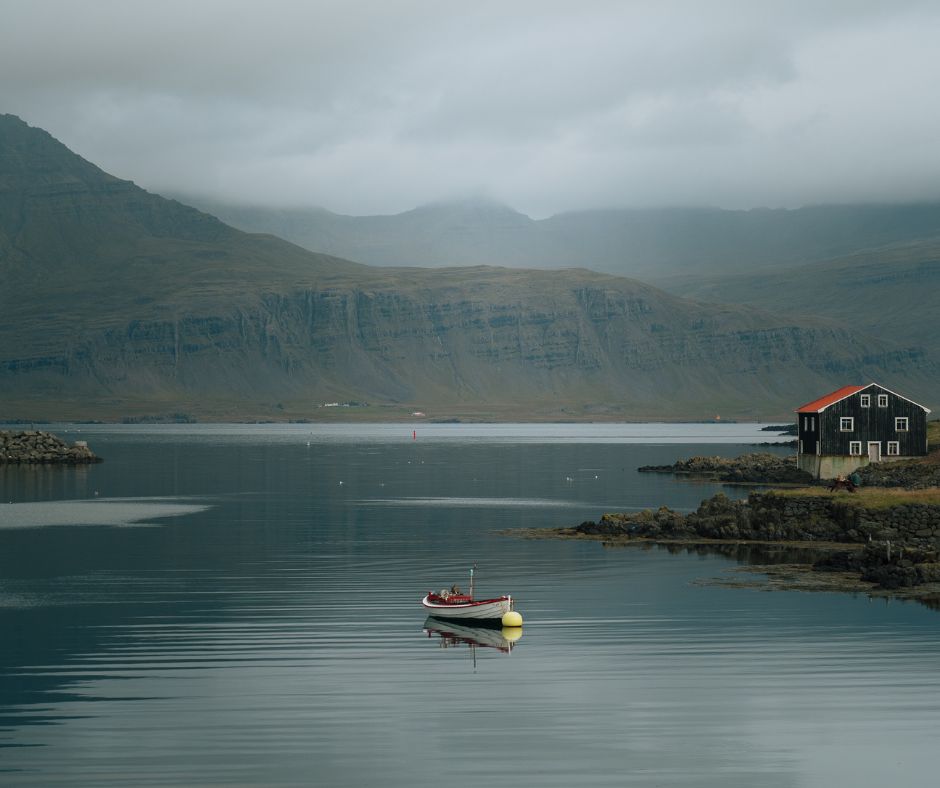
Iceland is surrounded by water, so you can expect anything between 65-85% humidity on any given day.
If the temperature is around freezing, the humidity makes it even colder. And let me tell you, it’ll chill you to the bone!
On days like this, there’s nothing better than ducking into a coffee shop and warming up with a nice latte or cup of tea in front of a fireplace.
3. How Cold is Iceland: Regional Differences in Temperature
You’ll also notice that the weather in Iceland can vary quite a bit depending on where you are in the country.
The West and South tend to be a little warmer and usually get more rain.
North Iceland and East Iceland are often colder, with more consistent snow and a more “traditional” winter.
Reykjavík weather and conditions along the South Coast tend to be milder in winter, with less snow, thanks to coastal conditions.
In more remote areas like the Westfjords, winter can be much harsher, with road closures, heavy snow, and even avalanche risks.
The Highlands are also colder, windier, and inaccessible in winter.
| REGION | AVERAGE WINTER TEMPERATURE | AVERAGE SUMMER TEMPERATURE |
| Reykjavik (Capital Region) | 23 – 37 °F (-5 – 2°C) | 54 – 60 °F (12 – 15 °C) |
| South Iceland | 31-40°F ( -1 – 4° C) | 48-57°F (9-14°C) |
| North Iceland | 32 – 21°F (0°C – -6°C) | 43 – 55°F (6°C – 13°C) |
| East Iceland | 23 – 34°F (-5 – – 1°C) | 57 – 44°F (6°C – 13°C) |
| Westfjords | 25°F – 34°F (-4°C – -1°C) | 45°F – 52°F (7°C – 11°C) |
| Highlands | 5 – 15°F ( -15 to – -9°C) | 45-65°F (7 – 18°C) |
How Cold Does Iceland Get: Average Temperature in Iceland by Month
If you’re wondering how cold Iceland really gets, this monthly breakdown gives you a good starting point. Just keep in mind that the wind and damp air can make it feel colder.
| MONTH | AVERAGE HIGH | AVERAGE LOW |
| January | 36°F (2°C) | 28°F (-2°C) |
| February | 36°F (2°C) | 28°F (-2°C) |
| March | 38°F (3°C) | 30°F (-1°C) |
| April | 43°F (6°C) | 34°F (1°C) |
| May | 48°F (9°C) | 40°F (4°C) |
| June | 54°F (12°C) | 46°F (8°C) |
| July | 57°F (14°C) | 49°F (9°C) |
| August | 55°F (13°C) | 47°F (8°C) |
| September | 50°F (10°C) | 42°F (6°C) |
| October | 44°F (7°C) | 36°F (2°C) |
| November | 39°F (4°C) | 30°F (-1°C) |
| December | 36°F (2°C) | 29°F (-2°C) |
Tips for Staying Warm in Iceland
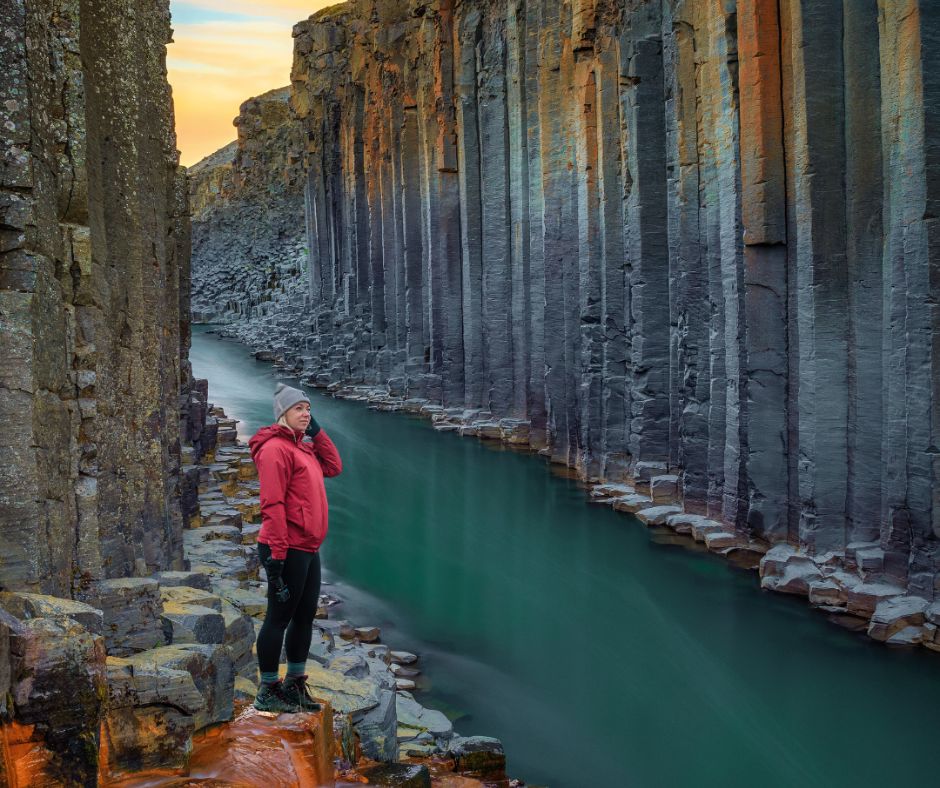
One of the keys to having a successful trip in Iceland is making sure you’re dressed appropriately. Here are a few pointers on how to stay warm when Iceland’s temperatures dip.
Layer up: Thermal layers are your new best friend! Start with a good base layer, then add a warm mid-layer, ideally wool. One of the best options is an Icelandic lopapeysa sweater. They’re incredibly warm, and I wear mine all the time. Yes, they’re a bit pricey, but so worth it.
Protect your extremities: Fingers, toes, and ears are always the first to feel the cold. A good hat, warm gloves, and thick socks go a long way in keeping warm.
Stay dry at all costs: Rain, snow, waterfall spray… it all adds up. Once you’re wet, you’ll feel cold fast. Having protective rain gear is a must, especially if you’re visiting the waterfalls in Iceland.
Wind and waterproof gear: Like I mentioned earlier, it’s not enough that your jacket is waterproof, it needs to be windproof as well to protect against the wind here.
Check the weather forecast: This sounds obvious, but because of how unpredictable the weather is, you need to check the weather and road conditions every day before heading out. Especially if you’re doing any of the hikes in Iceland, you need to know what to expect when you’re out.
Wear practical footwear: I’ll be honest, I don’t even own “cute winter shoes” in Iceland.
Flats, exposed ankles, or anything remotely fashion-first? That’s a recipe for freezing cold feet (or worse, slipping on ice). You need proper, waterproof boots with grip, and crampons are a must in winter!
Packing for Iceland
The biggest mistake people make? Dressing for the temperature instead of how it actually feels.
In Iceland, those are two very different things.
The season in which you visit Iceland will affect the way you pack.
Here are a few resources I highly suggest you go through before you start packing:
👉 Winter: Iceland Winter Packing List: Everything You Need For Your Adventure
👉 Spring: Iceland Spring Packing List: Pack Like A Pro In April & May
👉 Summer: Iceland Summer Packing List: Expert Tips on How To Pack for Your Adventure
👉 Autumn: Essential Iceland Fall Packing List: How to Pack for a September & October Adventure
If you haven’t done it yet, download my FREE Iceland Packing Guide. There are packing checklists, tips on how to layer your clothes, and shopping lists for each season for items I personally recommend (even for the kids).
Grab your Iceland Packing Guide below.
How Cold Is Iceland: Planning Your Trip Well
Iceland isn’t the coldest place in the world, but it’s one of the easiest places to feel unprepared if you don’t take the weather seriously.
How cold is Iceland? Well, it’s not just about the temperature.
It’s the wind.
It’s the damp air.
It’s how quickly conditions can change… and where in Iceland you happen to be.
Once you understand that, everything, from what you pack to how you plan your days, gets a whole lot easier.
If you want help planning your route, packing properly, and knowing what to expect, instead of stressing over logistics, my 👉 Iceland Travel Map & Guide is exactly what you need.
It’s an all-in-one planning system that combines a digital map and a detailed guidebook with must-see stops, hidden gems, and practical details like bathrooms, gas stations, and where to get a yummy meal.
And a whole lot more!
With this guide, you can plan your days with confidence, stay warm, and make the most of every moment.
Happy Planning!


Jeannie is the founder of Iceland with a View, an Iceland trip planning resource she launched in 2015 after moving to Iceland. Having lived in Iceland for nearly 11 years, she shares firsthand travel advice through in-depth articles, guidebooks, maps, itineraries, and a YouTube channel with over 110,000 subscribers. Her mission is to help travelers confidently plan unforgettable Iceland trips with practical, experience-based guidance.