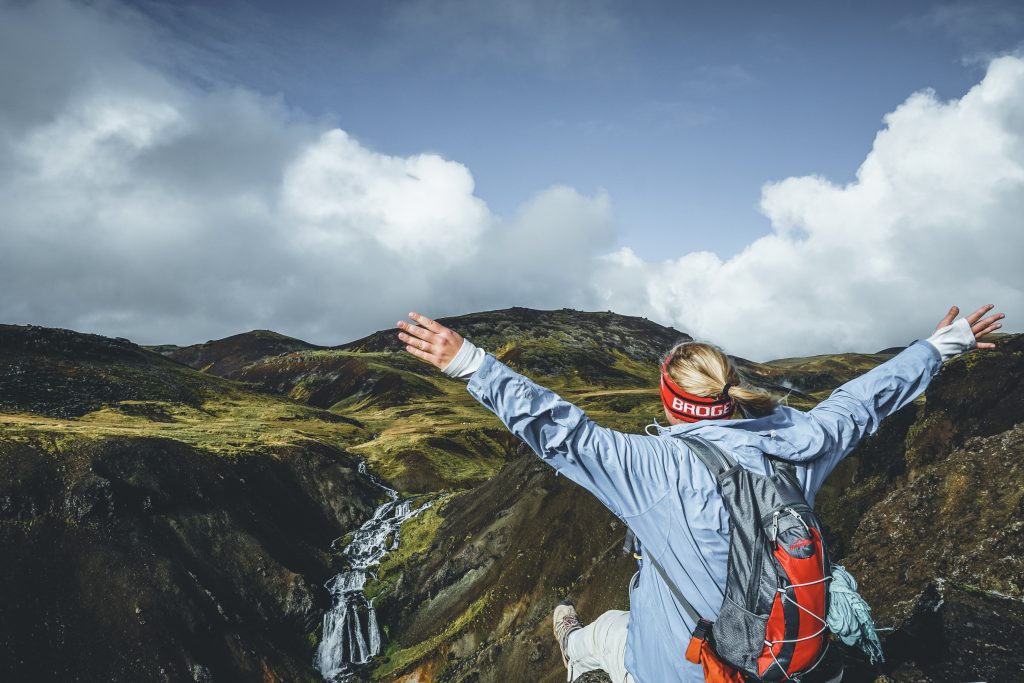
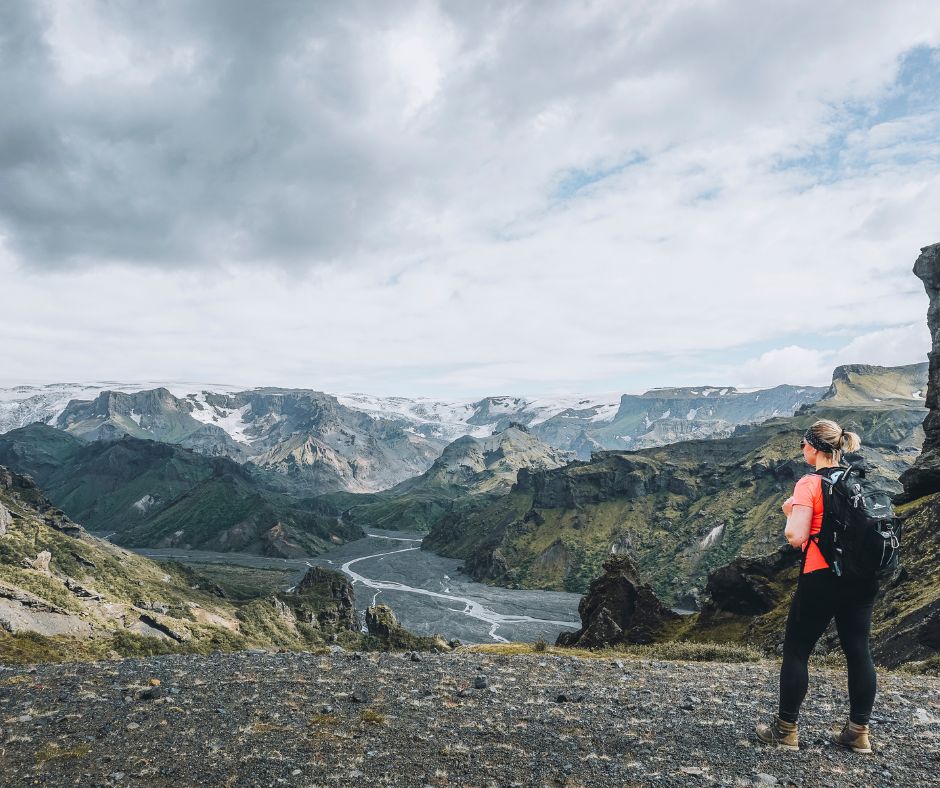
Iceland definitely has a reputation for being expensive, but that doesn’t mean you need to spend a fortune to have an amazing trip. If you’re looking for a more affordable way to enjoy incredible natural beauty, camping in Iceland might be one of the best decisions you make.
One of my favorite things about camping here is that you’re right in the middle of nature. Some of my best memories include waking up smack dab in the Highlands, or stepping out of my camper to a waterfall right THERE!
I’ve been living in Iceland for over 10 years now, and I’ve spent a lot of that time camping with my husband. Then the babies came along, and family camping became a whole new, slightly chaotic (but wonderful) experience.
On top of all that, helping travelers plan their Iceland trips is what I do every single day. So I’ve gathered everything I know into one place for you.
In this guide, I’ll walk you through everything you need to know about camping in Iceland, from my favourite campsites to booking and payment tips, along with a few things I’ve learned and practical advice to help you have the best experience possible.
There’s a lot to cover, so without further ado….
Let’s get into it!
Are You Cut Out For It? Camping in Iceland Pros & Cons
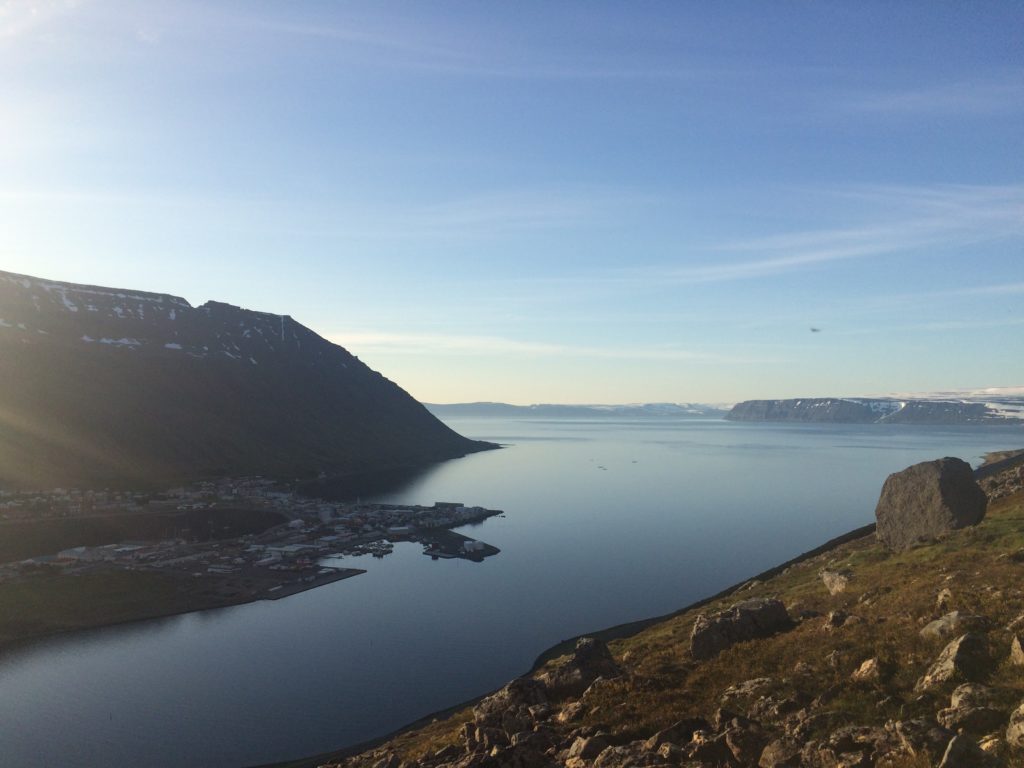
If you’re not sure whether camping is your thing, we need to bring out the big guns…
There are few things I love more than making lists, and one of the best ones is a pros and cons comparison.
There are a lot of reasons why you should consider camping in Iceland…and a couple of reasons why you might not want to as well.
I’ll cover them both here for objectivity! 👇
Pros
Let’s start off with the good stuff! There’s a lot to love about pitching a tent under the Icelandic skies. But these are at the top of my list:
Cost: Camping in Iceland is an amazing way to experience the country’s natural beauty without overspending. It’s so much cheaper than traditional accommodations, like staying at an expensive hotel or guest house.
If I think about our camper van experiences, we always end up spending less on restaurants because the camper has a built-in kitchen. We just buy food at the grocery store and prepare it ourselves. You won’t believe how much you can save!
Looking for more genius ways to save money on your trip? 👇
➡️ READ: How to Travel Iceland on a Budget: 25 Tips to Save Money on Your Trip
Nature: Camping lets you stay RIGHT in the middle of some of Iceland’s most beautiful locations. Instead of waking up in a standard hotel room, you unzip your tent (or swing open your camper door) to whatever incredible view you parked next to the night before. Whether that’s mountains, lava fields or glaciers!
For me, that first cup of coffee with a view is worth every bit of the packing and planning.
Flexibility: One of the things I like most about Iceland camping is the flexibility to design your own itinerary. You’re not tied to your hotel booking every single night, so it’s much easier to change your plans as you go.
Say a hike ends up taking way longer than you planned (which, trust me, happens all the time in Iceland!). No stress! You just find a campsite nearby and call it a night, right where you are.
Cons
I’m a big fan of camping, but I’d be lying if I said it was all sunshine and waterfalls! There are some downsides worth thinking about that make it less appealing for some travelers.
Weather: For one thing, Iceland’s weather can be pretty unpredictable, with cold temperatures, rain, and strong winds – even during the summer months.
Case in point: this July, we were “rewarded” with three straight weeks of rain and cold. In the middle of summer. That’s just how it goes here sometimes. 😂
If you’re not prepared to handle these conditions, it can take the fun out of camping.
Take it from someone who’s had more than a few crazy weather experiences while camping in Iceland!
There have been some nights where our tent felt like it might fly away…or where the rain leaked in through the seams. While I’m not trying to steer you away from camping, it IS worth taking the bad weather into consideration.
(You MIGHT just get lucky and the sunshine gods will shine upon you…but this is Iceland so you’ve gotta be prepared for anything and everything!)
Campgrounds: Not all campgrounds in Iceland are created equal. Some have great facilities and clean bathrooms, while others may not be up to par. If you’re someone who values a certain level of comfort and cleanliness, you might want to research campgrounds carefully before committing to camping in Iceland.
Challenging for first-time campers: And finally, if you’ve never camped before, I have to be honest…Iceland might not be the best place to start!
Given the unpredictable weather and potentially challenging conditions, it’s important to have some experience with setting up tents, cooking your own food, and being self-sufficient.
If you’re not comfortable with these aspects of camping, it might be better to start with a more straightforward camping trip before taking on Iceland’s unpredictable terrain.
When Is The Best Time to Camp in Iceland?
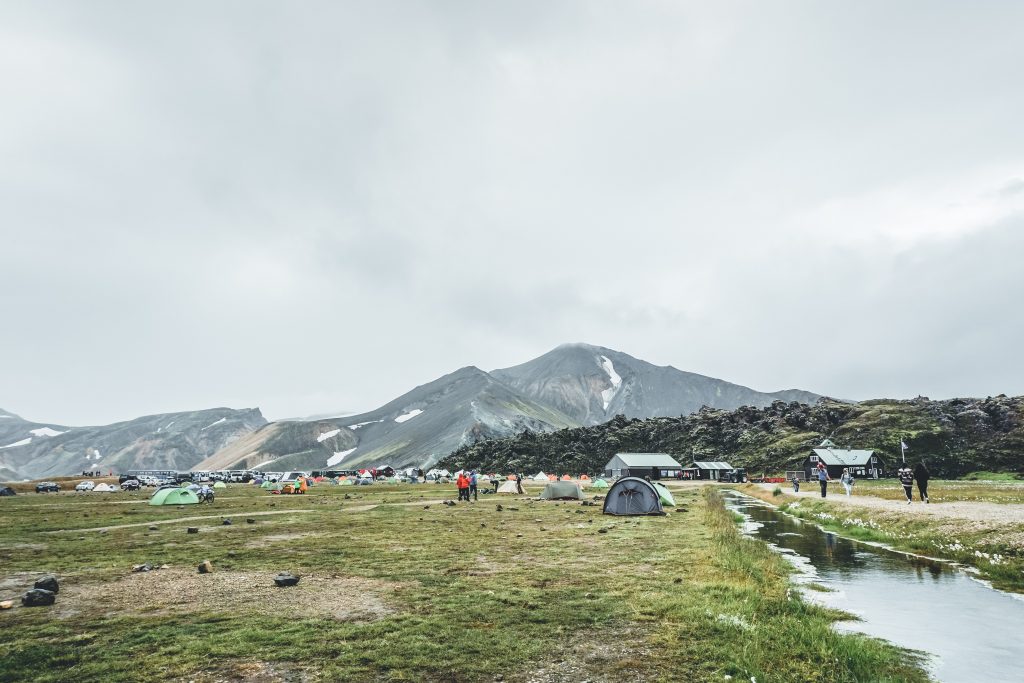
I prefer to camp in Iceland in the summer. But with around 200 registered campgrounds across the country, you can technically camp year-round. Just keep in mind that some campsites are only open in the warmer months.
This means that the facilities, such as running water, toilets, and showers, are only available in summer.
It’s also the only time the Highland roads are only open. If you’re looking to do epic hikes like the ones at Landmannalaugar, Fimmvörðuháls or Kerlingarfjöll this is the season to do it.
During peak tourist season, popular campsites can fill up quickly, so I recommend checking availability in advance.
You can find information on campsite availability on websites like tjalda.is, which is a great resource for planning your Iceland camping trip. But we’ll get into all that in a little bit.
Can You Go Camping In Iceland in Winter?
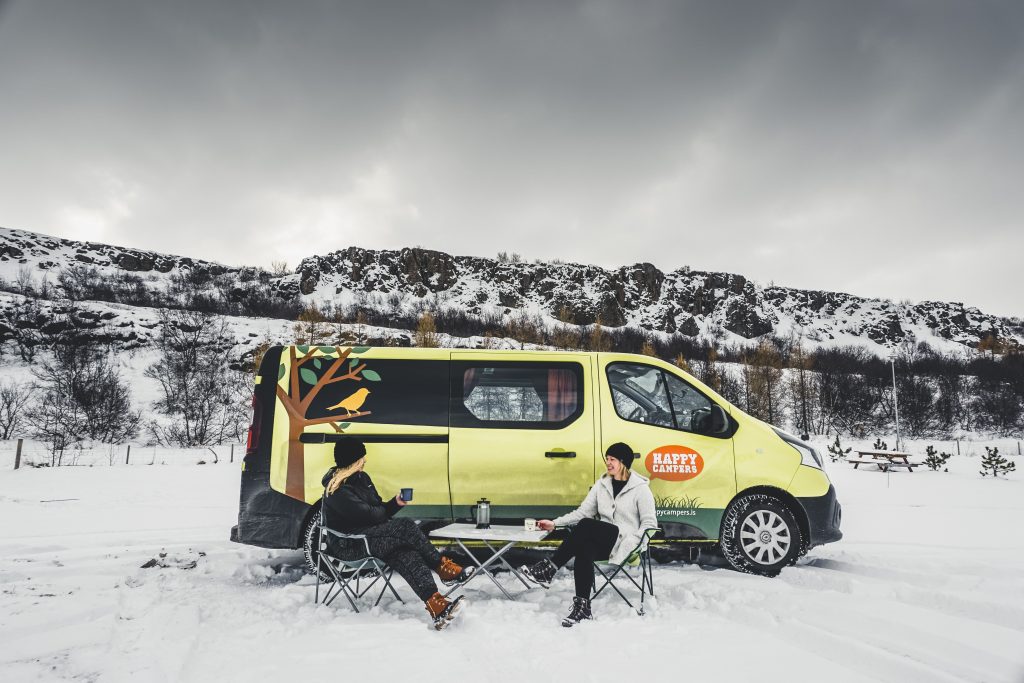
Yes, you can *technically* camp in Iceland during the winter. BUT, it’s not something I’d recommend unless you’re an experienced winter camper with the right gear.
If you’re considering camping in Iceland during the off-season, like September and October, be prepared for colder temperatures. From November through to March you can expect strong winds, rain and snow.
One thing a lot of people don’t realize is that Iceland has very few trees, so you can’t rely on natural windbreaks to protect your tent if the weather turns.
As I mentioned earlier, the majority of campsites close in winter, so if you’re relying on tent camping for your accommodation, make sure which campgrounds in Iceland are still operating before you go.
(Click to skip to an Iceland campsite map organized by season!)
Again, beware that Iceland winter camping is NOT for the faint of heart! It requires a different level of preparation. And you MUST have the right gear and clothing to stay warm.
If sleeping in a tent in freezing temperatures doesn’t sound appealing, I’d seriously consider upgrading to a camper van in Iceland instead.
It gives you a much warmer, more comfortable place to sleep while still letting you enjoy Iceland’s incredible winter landscapes.
💥 Happy Campers is my all-time favoritee campervan company, so if you’re looking for a reliable company, this is the way to go, use my code 👉 IWV10 for 10% off.
Wild Camping In Iceland: Are You Allowed To Camp Anywhere You Want?
So the short answer is mostly no… with the narrow exception for tents. Let me explain…
Iceland’s Nature Conservation Act (No. 60 of 2013) states that it’s illegal to camp in a tent, campervan, RV or similar vehicle outside designated campsites or urban areas unless the land owner gives written permission to do so.
The main exception for wild camping is only for one night with up to three tents on uncultivated land, unless there’s a sign up from the landowner that says otherwise.
You should never camp near farms without permission, and groups with more than three tents must get the landowner’s approval.
Sleeping overnight in camper vans, caravans, or similar vehicles is only allowed at designated campsites, unless you have permission from the landowner.
Icelanders care deeply about protecting their beautiful country and fragile ecosystem. Which is why they have lots of designated camping areas with garbage cans and facilities to accommodate tourists.
If you still want to try your hand at wild camping, you can learn more on this official site with all the camping rules.
My honest advice: Stick to registered campsites. You’ll avoid getting into trouble, plus you have so many to choose from!
Iceland Camping Map
Happy Campers has a super convenient map with ALL the campsites in Iceland.
What I love is that they’ve organized it into summer, winter, and hybrid campsites. And there’s information on each individual campsite
You can check it out here: 👉 Happy Campers Campsite Map
The blue campsites stay open all year long. Red ones stay open at least a bit into fall and spring. And green is summer-only.
What’s great about this is that you can use this map in combination with my 👉 Iceland Travel Map with over 1500 pinned locations.
And while the Happy Campers Iceland map shows you where to camp, my digital map will also show you nearby gas stations, grocery stores, hot springs, hikes, and so much more.
How to Book Your Campsite in Iceland
Start by locating campgrounds on a map – whether it’s my Iceland Travel Map, or you have a map that’s provided to you from your camper van company, you’re going to want to locate the campgrounds in Iceland.
The nice thing about most of the campsites in Iceland is that they’re on a first-come, first-served basis. There’s no check-in or check-out time, and you don’t need to prebook your campsite reservation, you just show up when you get there.
My Type A brain isn’t always so brave, I’m always afraid that it’s going to be full, especially in peak season! So I prefer to book in advance where I can.
Book on the Campsite Website: Many of the campsites will have their own dedicated website where you can book.
Check for availability on Tjalda.is: Compare campsites in different regions and use the filter for facilities and nearby activities!
Iceland Campsite Costs
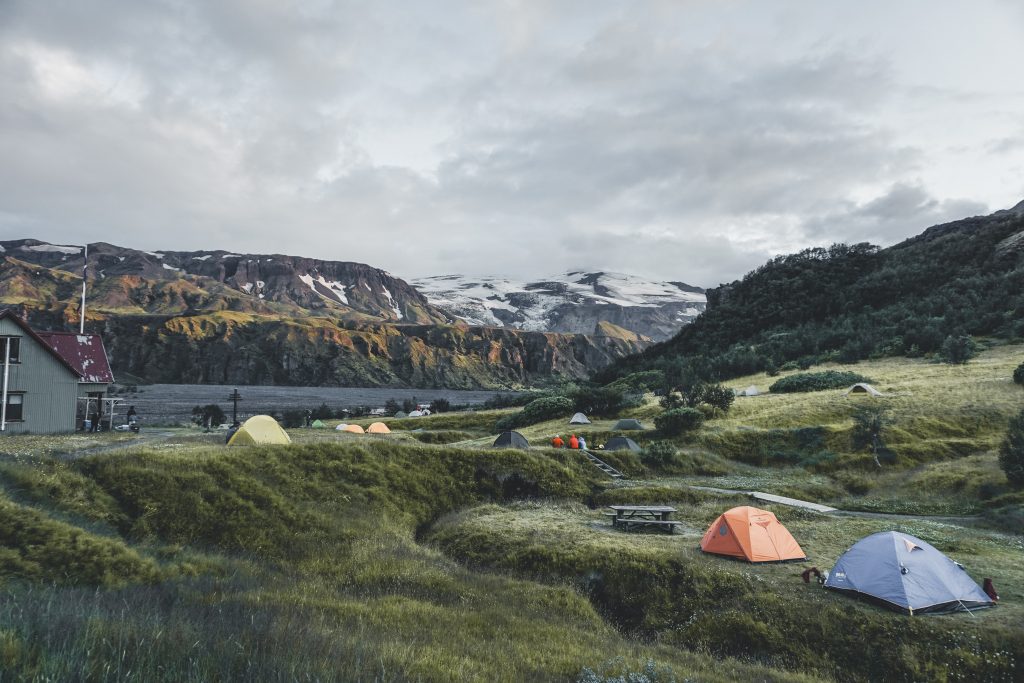
The good news is that camping in Iceland is generally an affordable option!
Iceland camping prices are typically quoted per person and range from 1,500 to 2,500 Icelandic krona (equivalent to $12-$20 USD) and include access to bathroom facilities.
BUT, you can find campsites that are pricier than this, charging as much as 3000 ISK per person.
The more expensive campsites also offer showers, saunas, and geothermal pools as part of the cost. Cheaper campsites may charge an additional fee of around 500 krona ($4) for showers.
💥 Remember to factor in the lodging tax. This is 400 ISK ($3USD) per night that is payable on site.
How to Pay
Campsites are able to take either cash or card. Obviously, the cash would be in local currency, the Icelandic Krona. When you go onto the Tjalda.is website, some campsites will let you prebook through the Parka app. You’ll also need this app to pay for parking in Iceland.
If you haven’t pre-booked, you’re going to look for a place to pay, and this could be either at a reception office or by leaving money in a pay box. This depends on the time of year or whether the reception is open.
If there seems to be an area where there is a reception but it’s closed for the day, then just make sure to pay the person in the morning before you head out.
A lot of times campsite attendants will go around quite early in the morning and just knock on your window and make sure that you pay before you leave, so make sure to just do that before you go!
What is the Iceland Camping Card?
It’s a pre-paid card that gives you access to over 30 different campsites around the country for a flat fee. You can buy it on utilegukortid.is and the exclusive card for 2026 costs 24900 ISK, around $200 USD.
This price covers two adults and four children under the age of 16, per camping unit, per night.
The idea is that it works out cheaper overall than if you were to pay for each campsite individually.
Keep in mind that it ONLY covers the overnight pitch fee, for 28 nights of total stay. So all the extras like using the facilities at the campsite like showers are not included. (The card is not valid for winter camping.)
There are, however, a few things to consider before deciding if it’s the right choice for your trip. 👇
Should You Get An Iceland Camping Card?
This isn’t a clear-cut answer, because it depends on your trip. If you’re coming to Iceland with your family or group, and your route coincides with the campsites on the list, then, yes, it can be worth it.
But if you want the flexibility to decide where to stay as you go, and that campsite is NOT on the list, I probably wouldn’t do it.
I would also only suggest purchasing a camping card if you’re staying for at least ten nights.
If you want a detailed breakdown, some math and my honest opinions, I’ve done a whole video about it here. 👇
Best Campsites in Iceland I’ve Stayed At
Now let’s get to the good stuff!
If you’re not sure where to camp in Iceland, I’ve been camping here for over 10 years, and these are some of the best sites I recommend across the country.
South Iceland
There are SO many places to camp in South Iceland, and the campgrounds here are top notch. It’s so hard to narrow it down, but I did my best.
Skógafoss Campground
Waking up to the roar of the epic Skógafoss waterfall right outside your tent- yes, imagine it because it’s real! The scenery is absolutely insane!
This campsite is especially popular with hikers tackling the Fimmvörðuháls trail.
There’s a restaurant on-site, but to be fair, the restrooms leave something to be desired. You’ll also need to share them with the visitors that aren’t camping over and just visiting the waterfalls in Iceland.
Skógafoss Camping Fee:
- Children stay for free.
- Adults (14+) 2200 ISK.
- Extras: Shower: 400 ISK for 5 minutes. (Bring coins). Electricity: 1200 ISK.
Vík Campsite
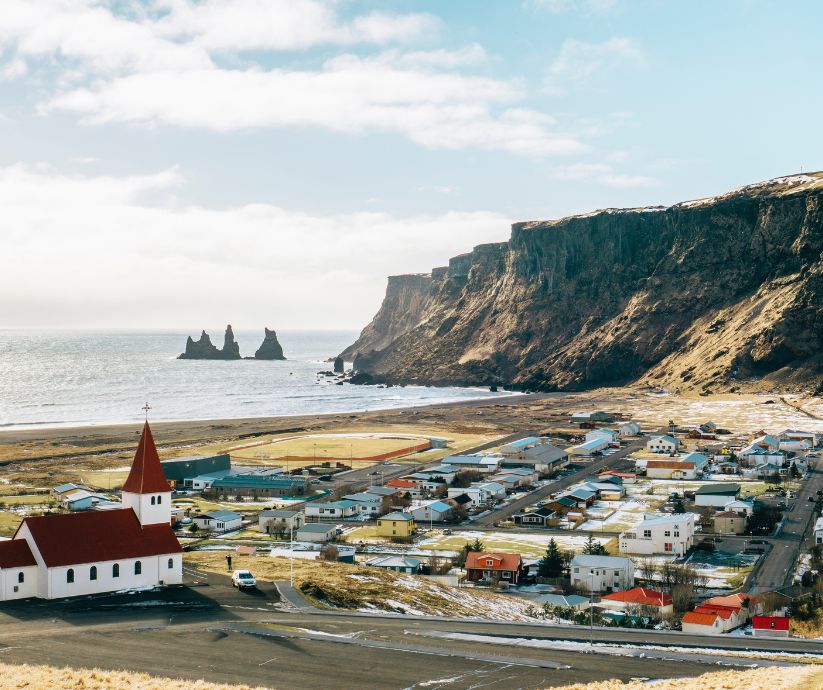
This is probably one of the busiest campsites I’ve been to, and it’s easy to see why.
With nearby sites like Katla, Dyrhólaey and Reynisfjara, not to mention the village of Vík, you also have a lot of popular spots and conveniences closeby.
You can buy groceries, fill up your gas and there’s even a nearby pool.
Pro tip: If you’re going to reserve a spot anywhere, make it this one – it fills up fast!
Vík Camping Fee:
- Adults 2100 ISK.
- Extras: Shower: 300 ISK. Electricity: 1000 ISK. Washing machine: 800 ISK. Dryer: 800 ISK
Þakgil (Thakgil)
Okay, I’ve got two words for how I felt about this place…
BLOWN. AWAY.
I dare say it’s the best campsite I’ve ever used. What’s crazy is that it’s been on my bucket list for years and I finally did it!
The drive in has the most unreal views. 😍 And the scenery is SO similar to some of the places we’ve been to in the Highlands. It’s like getting a taste of what the Highlands feels like… without being in the Highlands.
I need to mention though, the road to get there is not great. It’s full of potholes. But, unbelievably, it’s not an F-Road, and you don’t need a 4WD to get there.
When you get to the campsite, you’re surrounded 360° by mountains. There are so many hiking opportunities, and you can choose anything from a 30-minute loop to a 6-hour hike. And there’s a waterfall!
It did get busy at peak times but the amenities are good.
Þakgil (Thakgil) Camping Fee:
A little heads up, this one was expensive. We traveled with three adults and three kids, and it really added up.
- Children (12-16) only pay one night
- Adults (12+) 3000 ISK
- One shower included per night
East Iceland
This region is a bit more secluded, so if you’re looking for less crowds and hidden gems, East Iceland is a fantastic choice.
Höfn Camping Ground
We stayed here when we were on the way to Vestrahorn, this pretty fishing village has great views and glaciers nearby.
It’s just across the main road into town, so it’s easy to stock up if you run out of anything.
Höfn Camping Fee:
- Children (under 13): Free
- Adults (13+): 1800 ISK
- Campervan (2 persons): 4000 ISK
- Campervan (1 person): 2400 ISK
- Electricity: 1000 ISK
- Showers: 100 ISK for 3 minutes/200 ISK for 6 minutes.
Seyðisfjörður (Seydisfjordur) Campsite
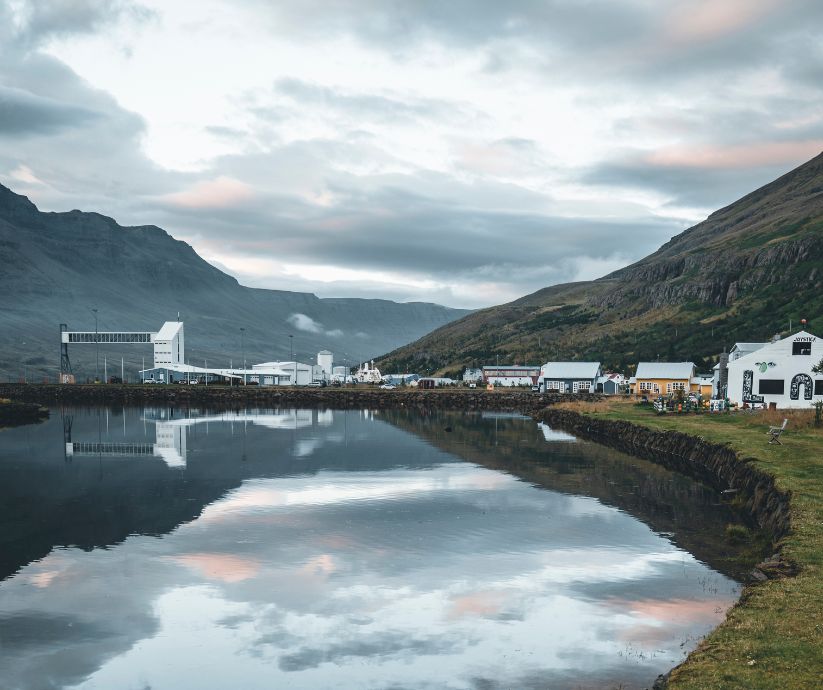
One of my favorite places to camp. It’s a cute little town with a rainbow street, restaurants, shops, and mountain views. I love it!
The Seyðisfjörður campground itself is basic (simple showers and amenities), but we really enjoy camping here.
Seyðisfjörður (Seydisfjordur) Camping Fee:
- Children under 15: Free
- Adults 2500 ISK.
- Seniors and disabled: 1600 ISK
- Extras: Electricity: 1500 ISK.
Snæfellsnes Peninsula
Ah, the jewel of the West! Snæfellsnes is one of the most spectacular areas of the country. It’s no wonder camping here is a popular choice.
Stykkishólmur Campsite
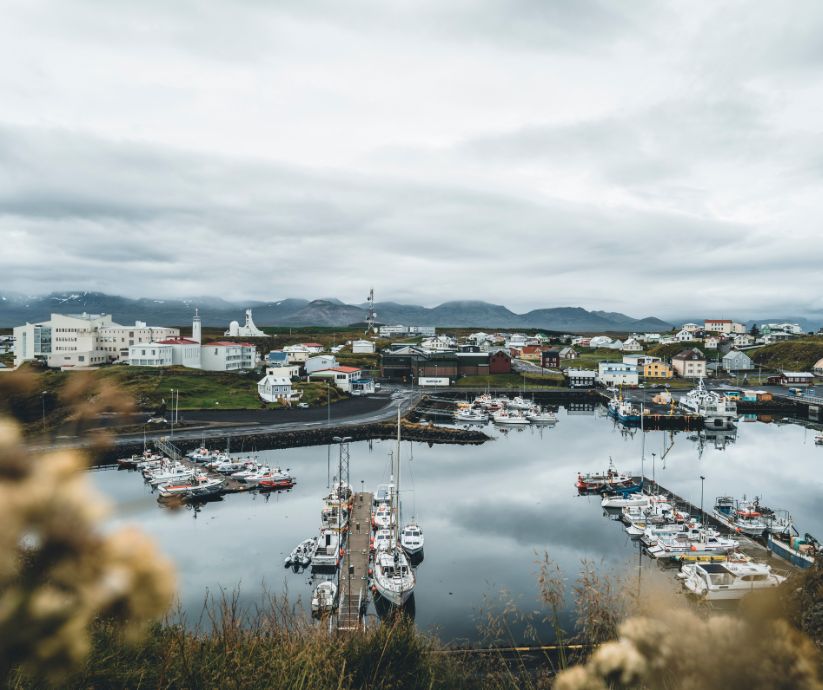
I really liked camping here with my kids because they have a park, bouncers, zipline and a good swimming pool to keep them entertained for hours! Stykkishólmur is a proper town so you’ve got restaurants and there are delicious bakeries close by.
We decided to hike up to the lighthouse with the kids because it’s an easy hike with nice views. As a mom traveling Iceland with kids, I really appreciated how family-focused this campsite was.
Stykkishólmur Campsite Fee:
- Children under 15: Free
- Adults:
- 1 night: 2000 ISK
- 2 nights: 3000 ISK
- 3 nights: 3600 ISK
- 4 nights: 5000 ISK
- 5 nights: 6000 ISK
- Seniors and disabled: 1400 ISK
- Extras: Electricity: 1400 ISK per night
Grundarfjörður Campsite
This is such an epic place to stay.
You can see Kirkjufell mountain from the campsite and the waterfalls are RIGHT THERE.
The town swimming pool is close, and you’ll find playgrounds and a bouncy pillow. On a good weather day, the views are just lovely. I would definitely go back!
Grundarfjörður Campsite Fee:
- Children under 15: Free
- Adults: 1800 ISK
- Seniors and the disabled: 1300 ISK
- Electricity: 1300 ISK
They offer discounts if you stay three days or more.
Highlands
The Highlands campsites are the most remote, but also some of my absolute favorites. Just know they take more effort to reach.
Thórsmörk (Þórsmörk) : Básar Campsite
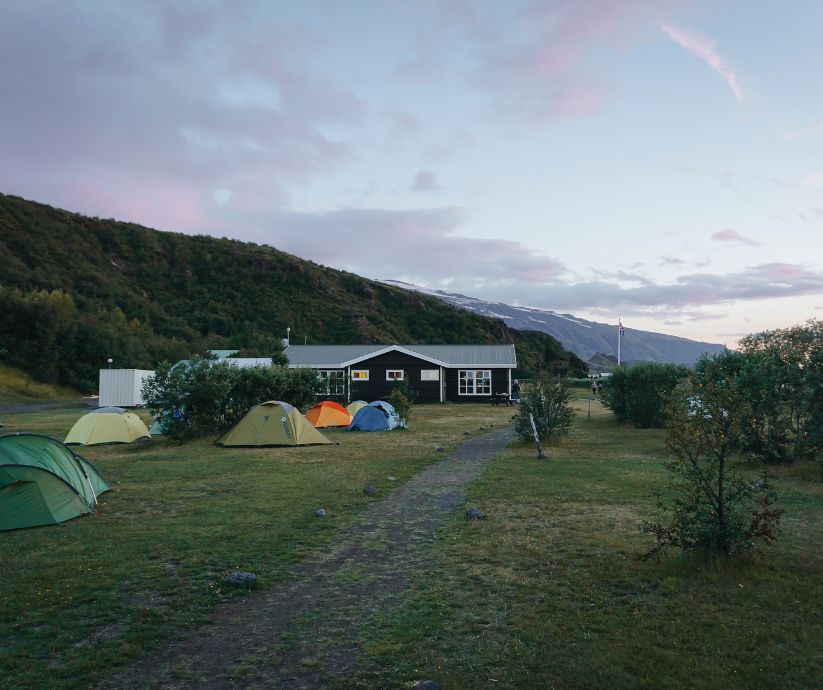
Getting here is half the adventure!
You’ll pass Seljalandsfoss waterfall and then drive through river crossings.
I’m not gonna lie, the road is rough going, so you need a proper 4×4 camper (luckily Happy Campers has them).
You won’t be able to drive all the way to the Volcano Huts because there’s a river crossing too deep for most vehicles, so camp at Básar instead. It’s the most popular site in Thorsmork.
The drive in alone is worth it. The glaciers, canyons, waterfalls, and lush green mountains surround you the whole way.
Every Saturday night they have a bonfire where everyone gets together. It’s so fun!
There’s also a reception with a convenience store and a restaurant onsite.
Basar Camping Fee:
- Children 12 years and younger: Free
- Youth (13–17 years): 1250 ISK per person / night (50% discount)
- Adults: 2500 ISK per person / night
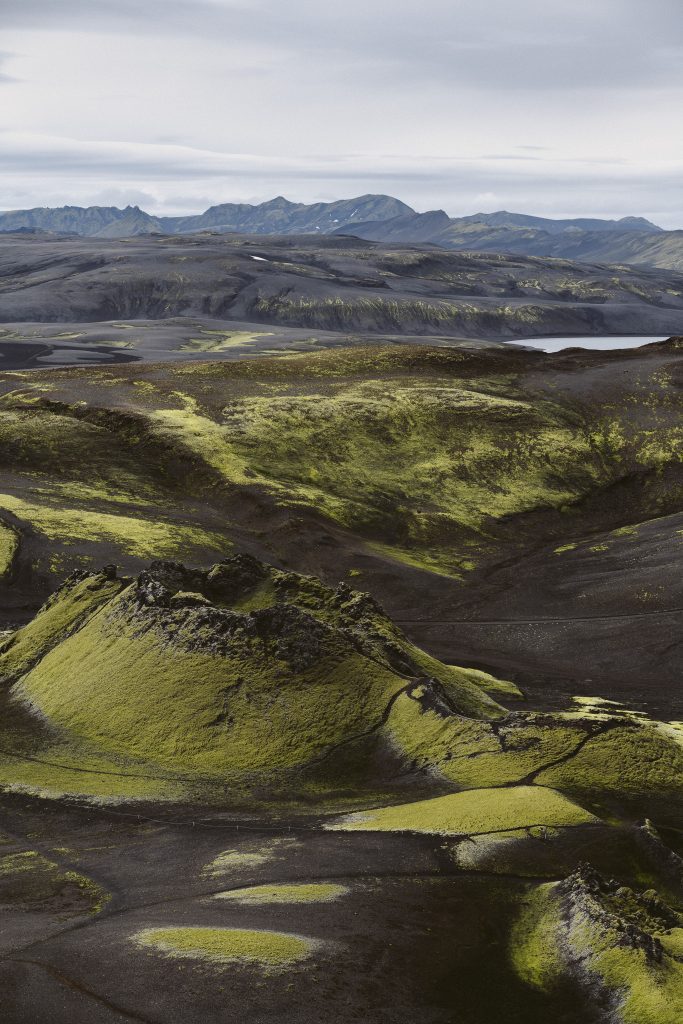
Landmannlauger Base Camp
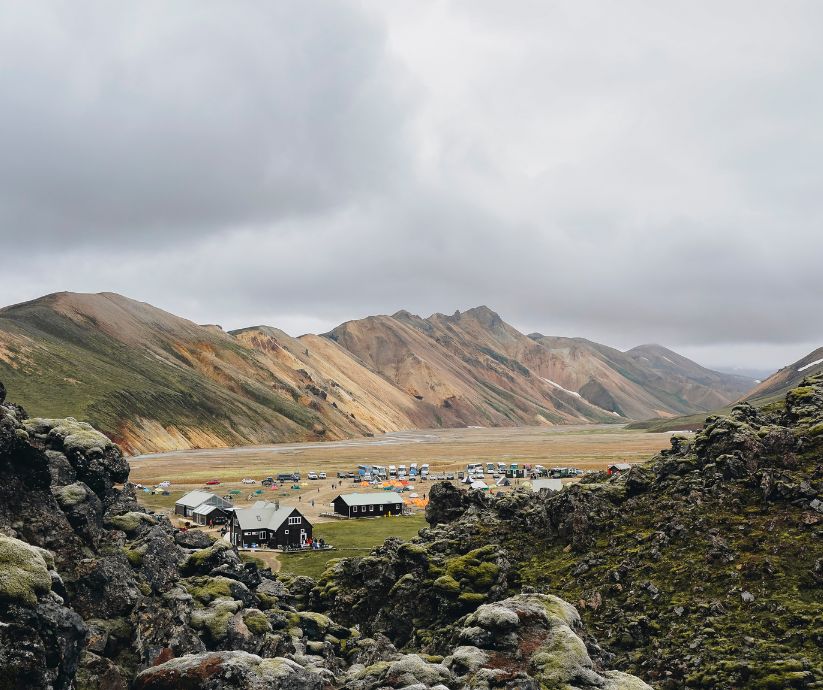
This might be one of the best places on earth, full stop. I still get chills waking up here.
It’s a bit more difficult to get here than Thórsmörk, the drive is longer and rougher.
There are three different routes to enter depending on where you’re coming from. But the drive is very scenic. 😍
You can definitely do some sightseeing along the way (it’s all marked on my Iceland Highlands Map & Guide).
The amenities are exceptional – a bit more rustic, but you can expect that with it being so remote. There are plenty of toilets, places to wash up.
Do not get me started on the hiking opportunities here! We did the Blue mountain loop and then the lava field loop with my son, but you can find out more at the ranger station.
Landmannlauger Base Camp Fee:
- Children 0-6 : Free
- Youth (7–17 years): 1700 ISK
- Adults: 3400 ISK per person / night
- Shower: 1100 ISK
Find out more about this place below. 👇
➡️ READ: Landmannalaugar: What You Need To Know For An Epic Highlands Adventure
Bonus: Glamping in Iceland: Luxury Camping Accommodation in the Highlands
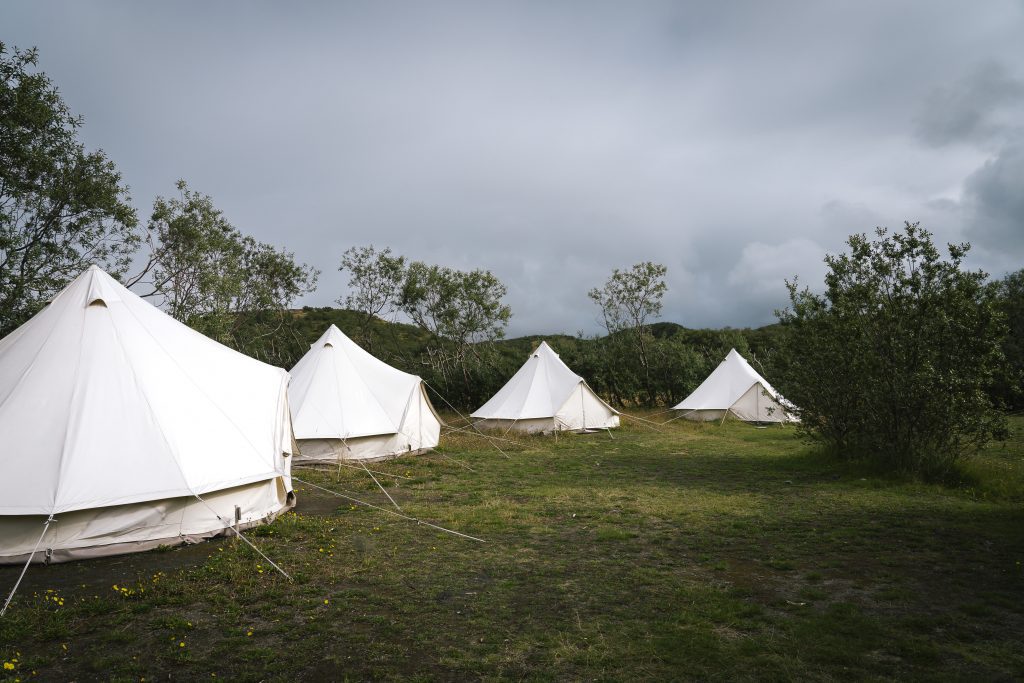
Okay, so we had a glamping experience in the southern Highlands (in Thórsmörk to be exact).
And let me tell you, a girl can get spoiled!
The Volcano Huts Camping grounds (Húsadalur) are located right where the famous Laugavegur trek ends, and we’ve stayed a few times at their hut accommodations, but I’ve always wanted to try out their glamping tents.
There are private shower stalls, outdoor sinks, indoor toilets that you have access to.
They also have a restaurant onsite with an impressive breakfast, lunch and dinner buffet. It’s definitely worth a visit if you want to camp but still want it to be a little fancy! 😊
Take a look. 👇
What Are The Facilities At Iceland Campsites Like?
In general, you can expect a wide range of facilities, including toilets, showers, laundry facilities, running water, wifi, and charging stations. However, the campgrounds in Iceland are drastically different from one to the next. You just have to either go with the flow or get an Iceland camping map that will give you some insight into what to expect from each place.
Another thing that some places have is a washing station or big outdoor sink where you can bring your dishes to wash.
I’ve also stayed in some campgrounds in Iceland that have an indoor kitchen facility. You’ll have access to a stove that you can cook at and a nice indoor place to sit with a few tables.
But on the other hand, I’ve also stayed at some super basic campsites with just a few toilets and nothing else.
Pro Tip: Do not ever, under any circumstances, leave behind food waste or be careless with dumping your water. Make sure to find a trash bin or a designated area for dumping this water if you’re staying in an RV. Let’s try and keep Iceland as beautiful and preserved as possible, folks!
Food & Water
Let’s talk more specifically about food and water. In terms of food, you have a couple of different options.
Bring your own food: Going grocery shopping before your camping trip in Iceland is a great way to keep things budget-friendly. You can either bring a lot of dry, prepackaged meals OR cook for yourself if you have the gear to do it!
Eat at restaurants: If cooking isn’t your thing, no need to worry! Most of the campgrounds in Iceland have restaurants nearby, so you can choose to eat out instead. You can use my digital Iceland Travel Map to find them. It’s so helpful, especially if you’re staying in more remote areas.
Water: Nearly all campsites have water facilities onsite. You can fill up your water tank there, or you can usually fill up nearby at a gas station. Remember, there’s tons and tons of free water in Iceland!
Charging Your Gadgets
When you’re camping in a tent and relying on your vehicle for power, make sure to charge up your gadgets while you’re driving.
Some campsites have electricity, but you might have to pay extra for it. If there’s a kitchen around, you could try using some of the outlets in there too.
Showers & Toilets
Toilets are a given at campsites and are usually free to use.
However, the shower situation can vary. Some campsites have awesome shower facilities with a changing area and hot water, at no extra charge.
But, at other places, you might need to pay for the hot water through a coin-operated machine.
So, make sure you bring some local currency and coins if you want a warm shower during your Iceland camping trip!
What’s The Difference Between Camping In Iceland vs. Camping In The U.S.?
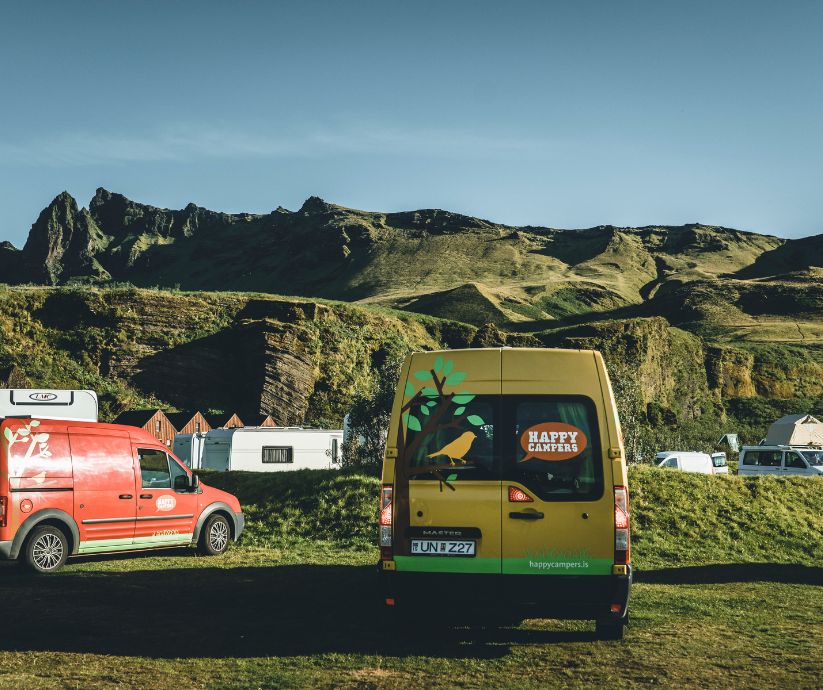
1. Campsites aren’t secluded: There aren’t a lot of trees in Iceland. Most campsites are just a big, open field where everyone pitches their tent (or parks their camper) wherever they want.
If it’s busy, this may mean you are super close to other people without anything in between you.
Also, sometimes campsites are on the outskirts of town, sometimes they are right in the town center, but rarely are they in the middle of nowhere.
2. You Can’t Build a Fire: This is mostly because there’s a lack of firewood (see tree comment above 👆). And it’s a fragile ecosystem.
Some campsites have metal grills set up, but most just have picnic tables where you can use a camp stove.
3. Running Water: Camping in the US usually means pit toilets and (maybe) running water, sometimes a shower, and the facilities are often dirty.
In Iceland, almost all campsites have flush toilets, running water, and most have showers.
Also, the facilities are clean! And, an added bonus, you don’t have to negotiate with a giant spider for use of the toilet! 😉
There are a lot more differences that the U.S. and Iceland have, if you’re curious to know what they are, check this out. 👇
➡️ READ: Iceland vs USA: 15 Surprising Cultural Differences You’ll Want to Know
Iceland Camping Packing List
If you are wondering what to bring on your camping trip, I’ve got you covered with this Iceland camping packing list:
- Tent – most people have one where the rain cover completely covers the tent because of high wind
- Ground tarp
- Extra stakes
- Sleeping bag – I’d recommend one that is rated for cold weather as it still gets pretty cold at night during the summer.
- Sleeping pad – the ground is actually pretty soft, and I felt really good with just my Thermarest.
- Pillow
- Camp Stove – I recommend a small backpacking stove.
- Cookware – this depends a lot on what you plan on doing for food. I did mostly freeze-dried backpacking meals so I brought 1 pot and 1 spork.
- Water Jug
- Eye Mask – if you are camping during the summer, it never gets dark. Like, not even close. If you plan on sleeping, you need to cover your eyes.
- Ear Plugs – it never gets dark, so the birds love to sing! 😊
- Fast dry towel
- Headlamp – for cave exploring! That’s the only place it’ll be dark enough for one in the summer.
- Food – this is up to you. If you plan on cooking using fresh ingredients, I’d buy them in Iceland. If you plan on going the backpacking food route, it’s much cheaper to buy in the U.S. and then bring with you (you can bring in up to 3kg of food excluding raw meat, eggs, and some other things).
- Things you’ll need to rent in Iceland are gas and a lighter.
This list covers your camping essentials, but there’s a lot more to think about when packing for Iceland’s unpredictable weather.
I’ve put together the Ultimate Iceland Packing Guide with seasonal packing lists, a layering breakdown, and my go-to product recommendations to help you prepare for anything.
Download your FREE PDF below:
FAQs
Here are quick answers to the questions I hear most often about camping in Iceland.
Are Campsites Expensive in Iceland?
No, camping is generally cheaper than staying at a hotel or guesthouse and is seen as one way of saving money on your trip. It costs anything from 12-20 USD a night to camp (excluding taxes and facilities) and that pretty much can be beat!
Is it Easy to Camp in Iceland?
Yes, it’s relatively easy to camp in Iceland. Most campsites have all the facilities you need for a comfortable stay. I’d say one of the biggest challenges about camping in Iceland is the weather. But if you’re renting a campervan, you’ll be a lot more protected from the elements than with tent camping.
Do You Need to Book a Campsite in Iceland in Advance?
No, at most campsites in Iceland, you do not need to reserve your spot. Just be aware that in peak season it could mean that spots are full, and I would recommend pre-booking if possible in the summer months.
Should You Rent A Campervan In Iceland?
Yes. If you’re planning a camping trip in Iceland, I highly recommend renting a campervan. Not only are they economical, but they also provide you with a vehicle, accommodation, and even meals all in one package.
Plus, let’s face it, tent camping in Iceland can be pretty intense. So why not make things easier and more comfortable with a campervan?
My #1 Campervan Rental Choice: Happy Campers!
If you’re wondering what Iceland camping company to choose, my go-to is always Happy Campers.
They were the very first campervan company in Iceland, and even though more have popped up over the years, none of them compare to the original. 😉
They’re a family-run business, and they know camping in Iceland like no other!
They offer you a super-detailed Iceland camping map that gives you the full lowdown on all of the campsites and what they offer. 👇
And if you want to get an exclusive 10% discount on your 👉 Happy Campers rental, be sure to use my code IWV10
Happy planning!


Jeannie is the founder of Iceland with a View, an Iceland trip planning resource she launched in 2015 after moving to Iceland. Having lived in Iceland for nearly 11 years, she shares firsthand travel advice through in-depth articles, guidebooks, maps, itineraries, and a YouTube channel with over 110,000 subscribers. Her mission is to help travelers confidently plan unforgettable Iceland trips with practical, experience-based guidance.